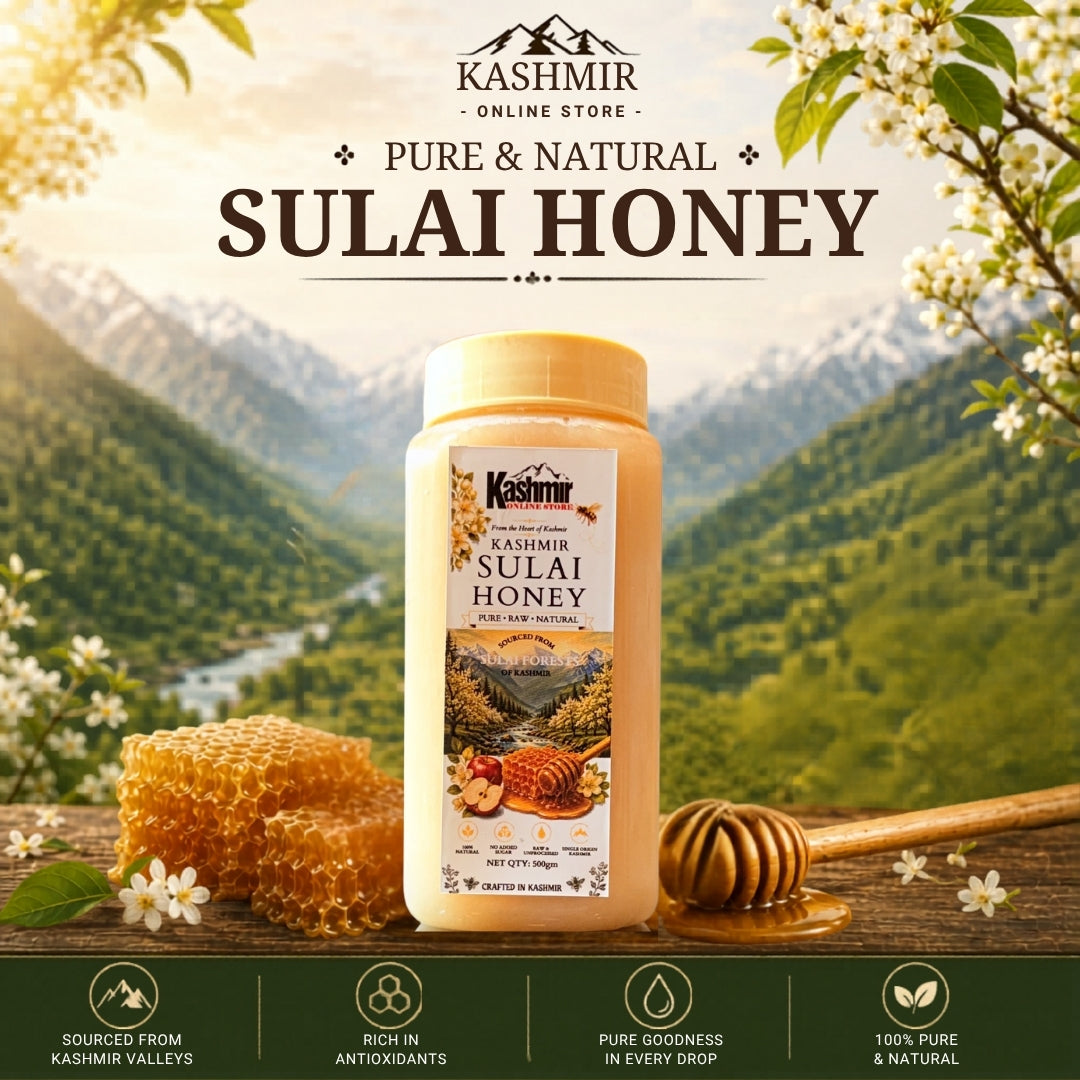
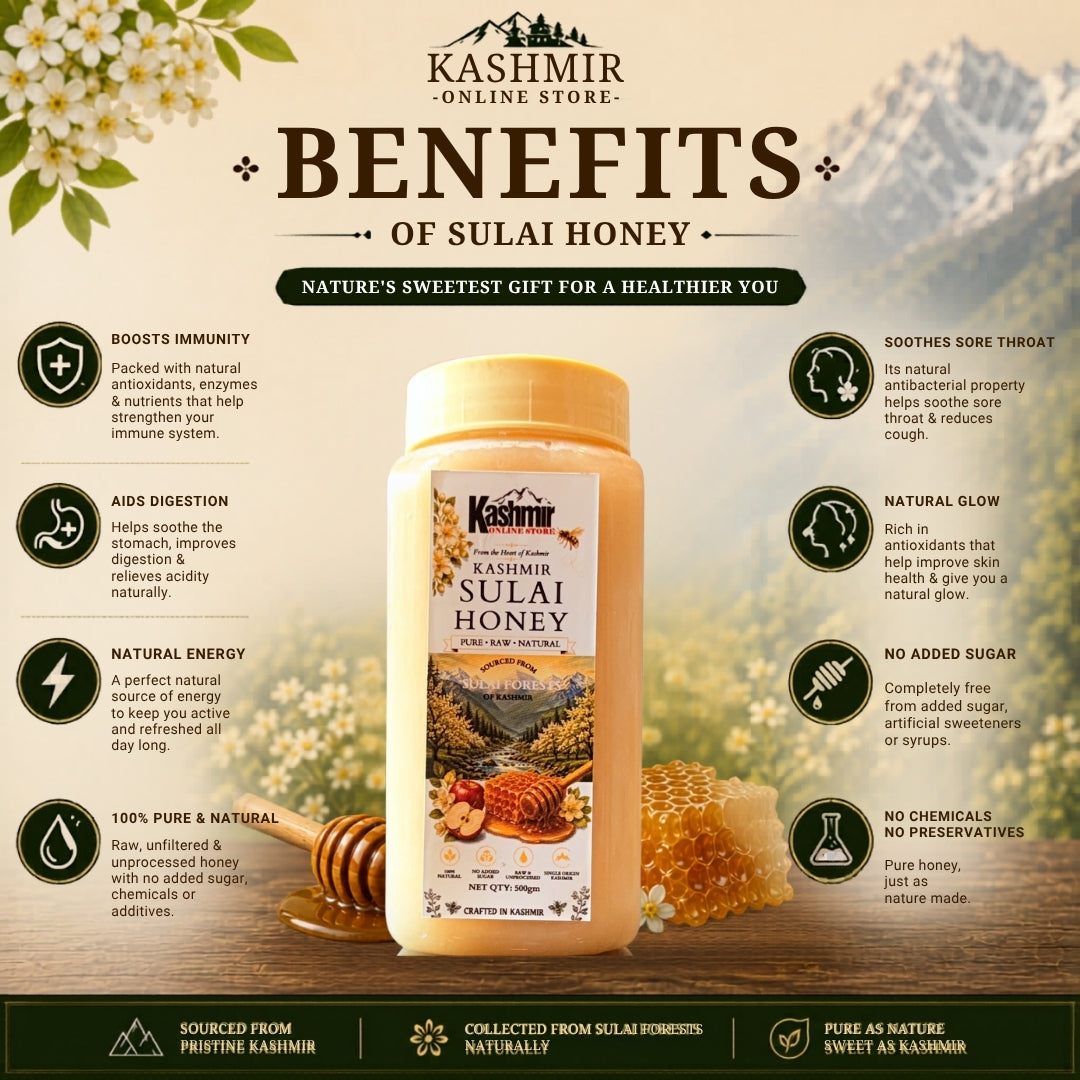
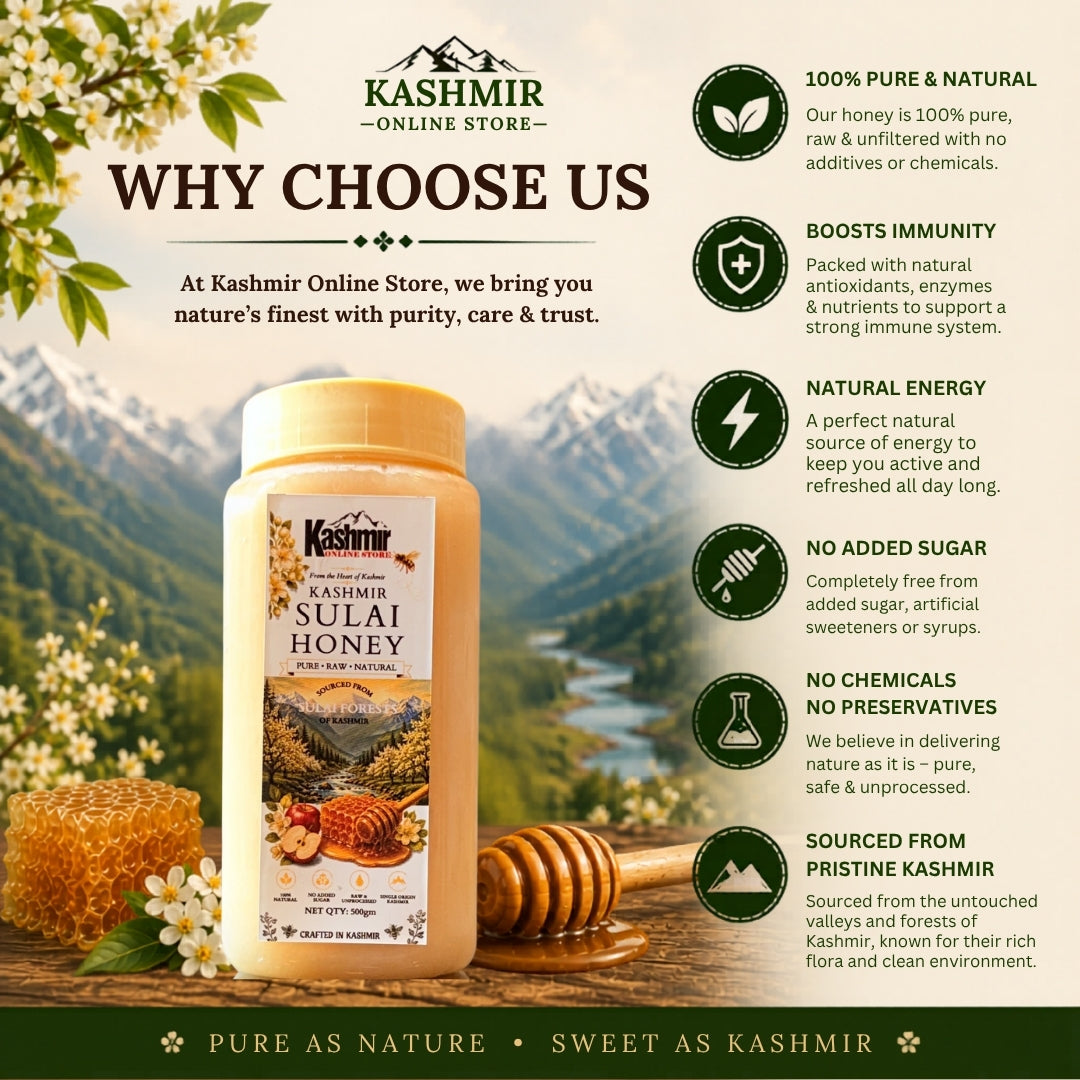
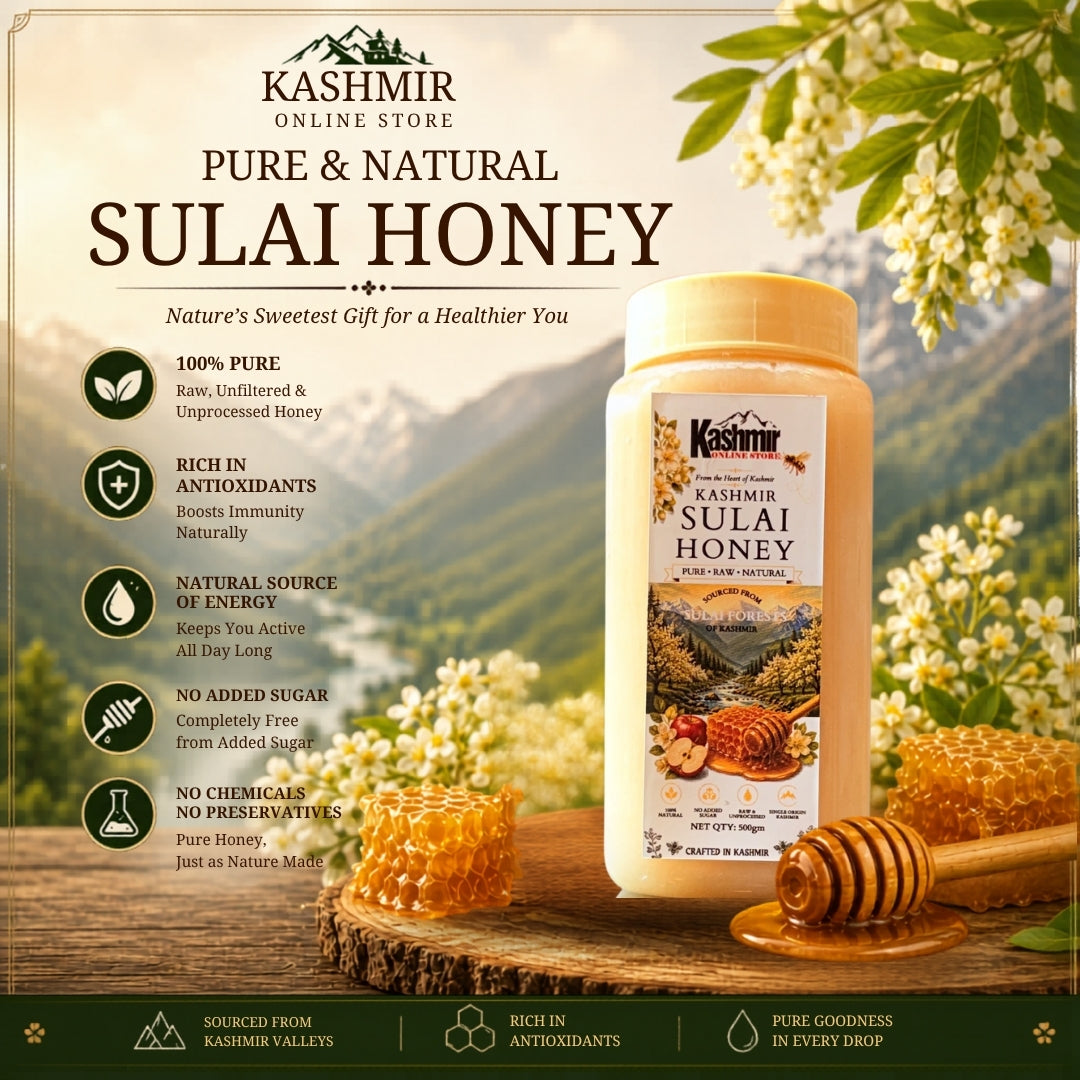
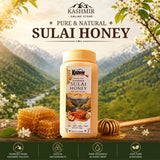
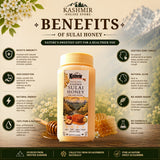
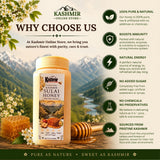
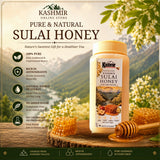
Forest honey from Himalayan hives where bees work wild flowering plants rather than one orchard crop. Deep amber and genuinely robust — if mild honey bores you, this is the jar.
Dark Amber
Wild mixed nectar
Strong Flavour
Almost malty
Winter Honey
Holds up in strong drinks
Where It Comes From
Wild flowers, not one crop
Orchard honeys come from bees working a single flowering crop for a few weeks. Forest honey is different: the bees range across whatever is flowering in the mountains, and the nectar they bring back is a mix of many wild plants rather than one.
That mixture is what produces the dark colour and the layered, robust flavour. It is also why forest honey varies more from season to season than a single-flower honey does — the mix of what was blooming is never quite the same twice.
Honest Answer
This is a strong honey. Some people find it too strong.
"If you are used to mild supermarket honey, start with the small jar."
We would rather say this plainly than have you open a two kilo jar and find it is not what you expected. Sulai is intense, dark and almost malty. Against it, the honey most people grow up with tastes like plain sweetness.
People who like strong flavours tend to love it and go back to it. People who want honey to disappear quietly into their tea usually prefer our acacia. Neither is the better honey; they are for different palates, and it is worth being on the right side of that before you order the biggest size.
Side By Side
Which of our three honeys
Feature
Sulai Wild
Apple Blossom
Acacia
Colour
Dark amber
Light golden
Very pale
Flavour
Strong, robust
Fruity, delicate
Mild, clean
Crystallises
Faster
Moderately
Slowly
Source
Wild mountain flowers
Apple orchards
Acacia blossom
Best for
Strong flavour, winter use
Breakfast, eaten plainly
Tea, dressings, everyday
Using It
Put it where it can stand up for itself
In strong drinks. Kahwa, black coffee and spiced preparations — places where a mild honey would vanish.
On bread with butter, where the salt and fat balance the intensity properly.
Let hot drinks cool a moment before stirring it in. Boiling liquid dulls even a robust honey.
Warm the jar if it sets, and always use a dry spoon. Never microwave honey.
Key Points
At a glance
Dark amber wild forest honey.
From mixed Himalayan wild flowers.
Strong, layered, almost malty.
Raw and unprocessed.
Varies more by season than orchard honey.
Crystallises faster than acacia — normal.
Not for infants under one year.
Available 500g, 1kg and 2kg.
Buying From Kashmir Online Store
What we will and will not tell you
We tell you when a honey may be too strong for you.
We suggest the small jar first rather than the biggest.
We explain why forest honey varies between seasons.
FSSAI registered, dispatched from Pampore, Kashmir.
GST invoice on every order, delivery across India.
Product Specifications
The details that matter
Attribute
Details
Product
Sulai wild forest honey, raw and unprocessed
Source
Wild Himalayan flowering plants
Colour
Dark amber
Flavour
Strong, robust, almost malty
Pack sizes
500g · 1kg · 2kg
Storage
Sealed, room temperature, dry spoon
Dispatch
From Pampore, Kashmir, with GST invoice
Strong, fruity or mild?
Tell us what honey you use now and how you use it, and we will tell you honestly whether Sulai is your jar.
A dark forest honey from hives in the Himalayan mountains, where bees work wild flowering plants rather than a single cultivated crop. That mixed wild source is what gives it a strong, layered flavour.
Why is wild honey darker and stronger?
Because the bees take nectar from many wild plants instead of one orchard crop. Mixed wild nectar produces a darker, more robust honey; a single-flower source like acacia gives something pale and mild.
Does it crystallise quickly?
Faster than acacia, yes. Crystallising is what natural honey does and is not a fault. Stand the jar in warm water for a few minutes and it loosens again.
Is it stronger tasting than regular honey?
Noticeably. If you are used to mild supermarket honey this will taste intense, almost malty. People either love that or find it too much — worth knowing before ordering the largest jar.
Can babies have honey?
No. Honey of any kind should not be given to infants under one year old. This is standard guidance worldwide and applies to raw honey particularly.