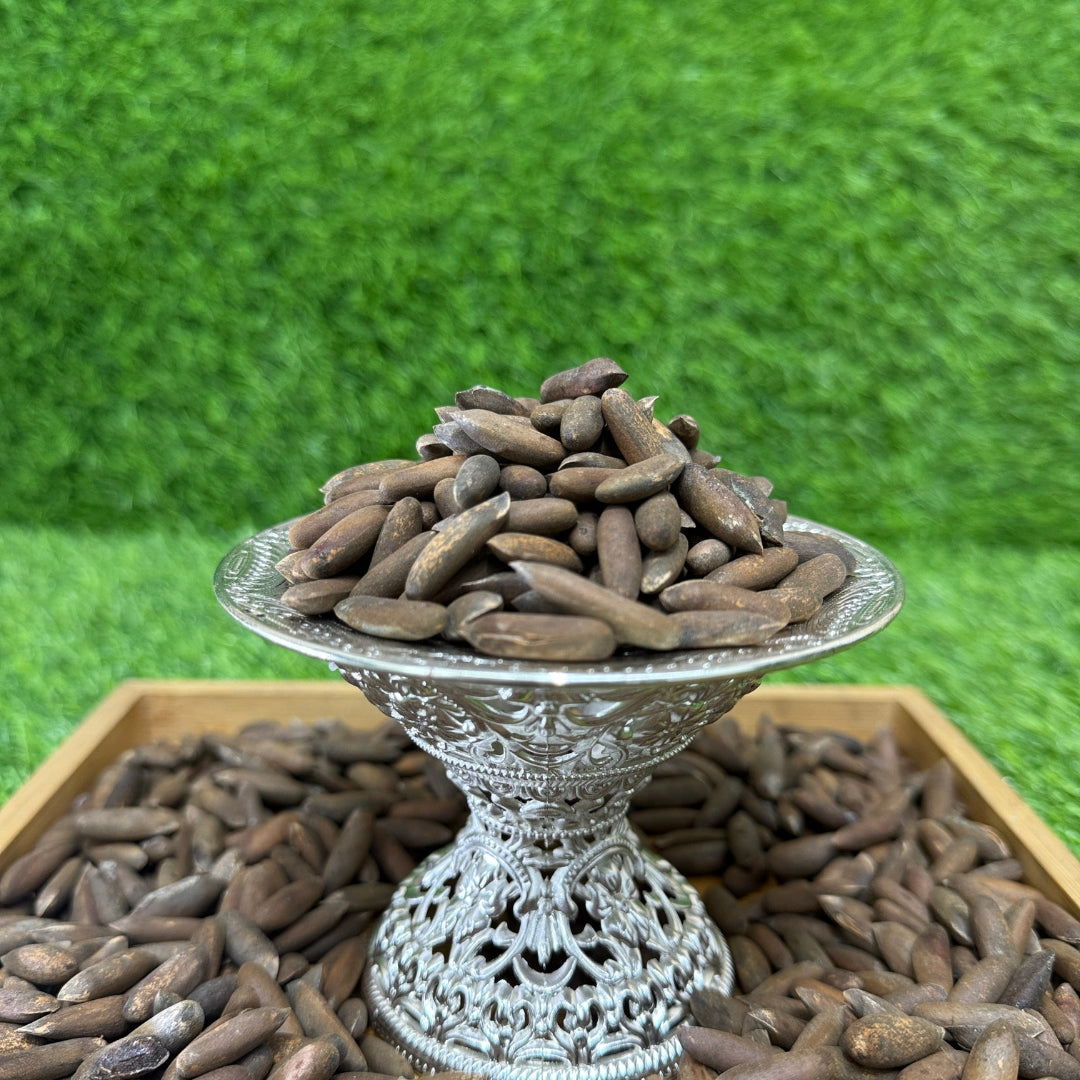
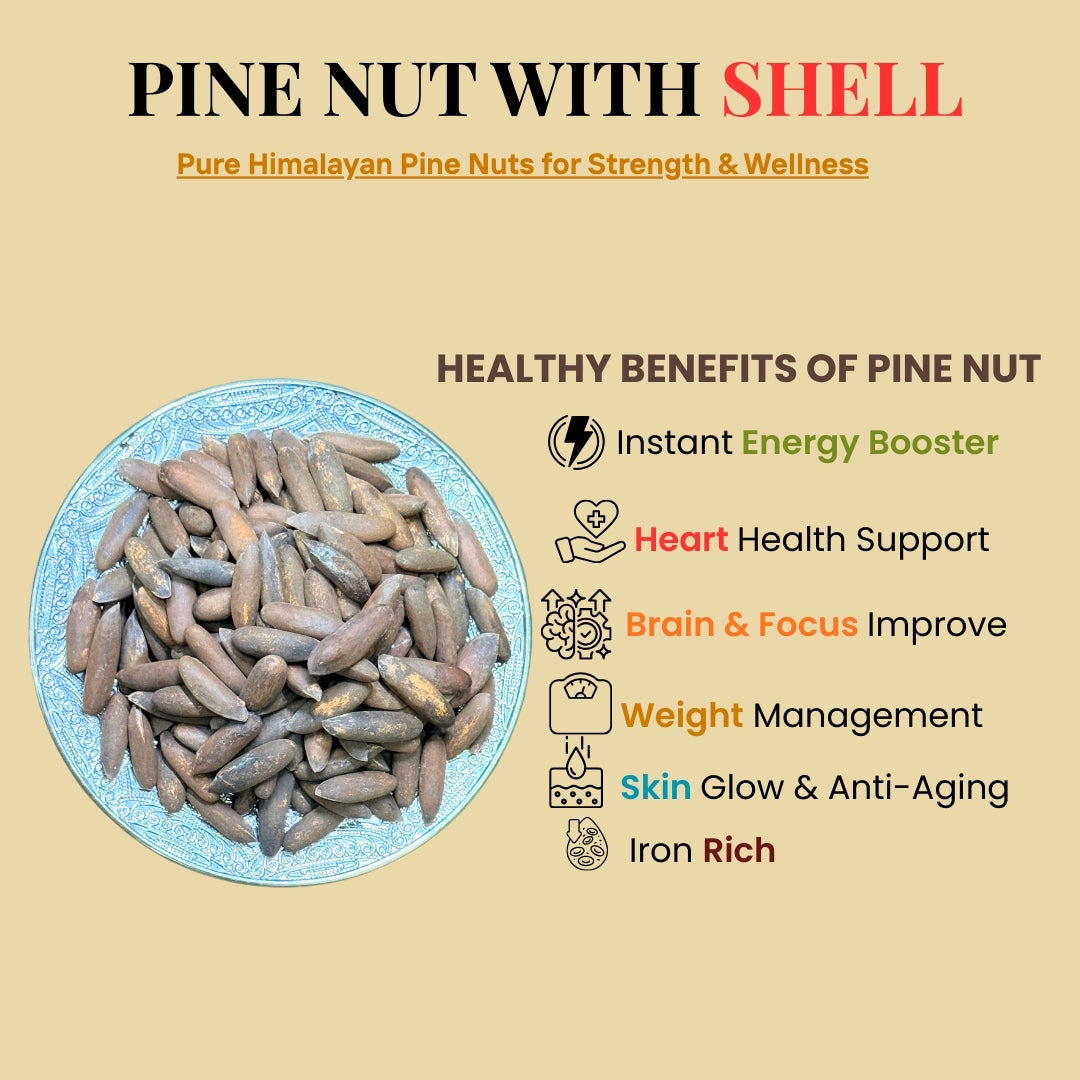
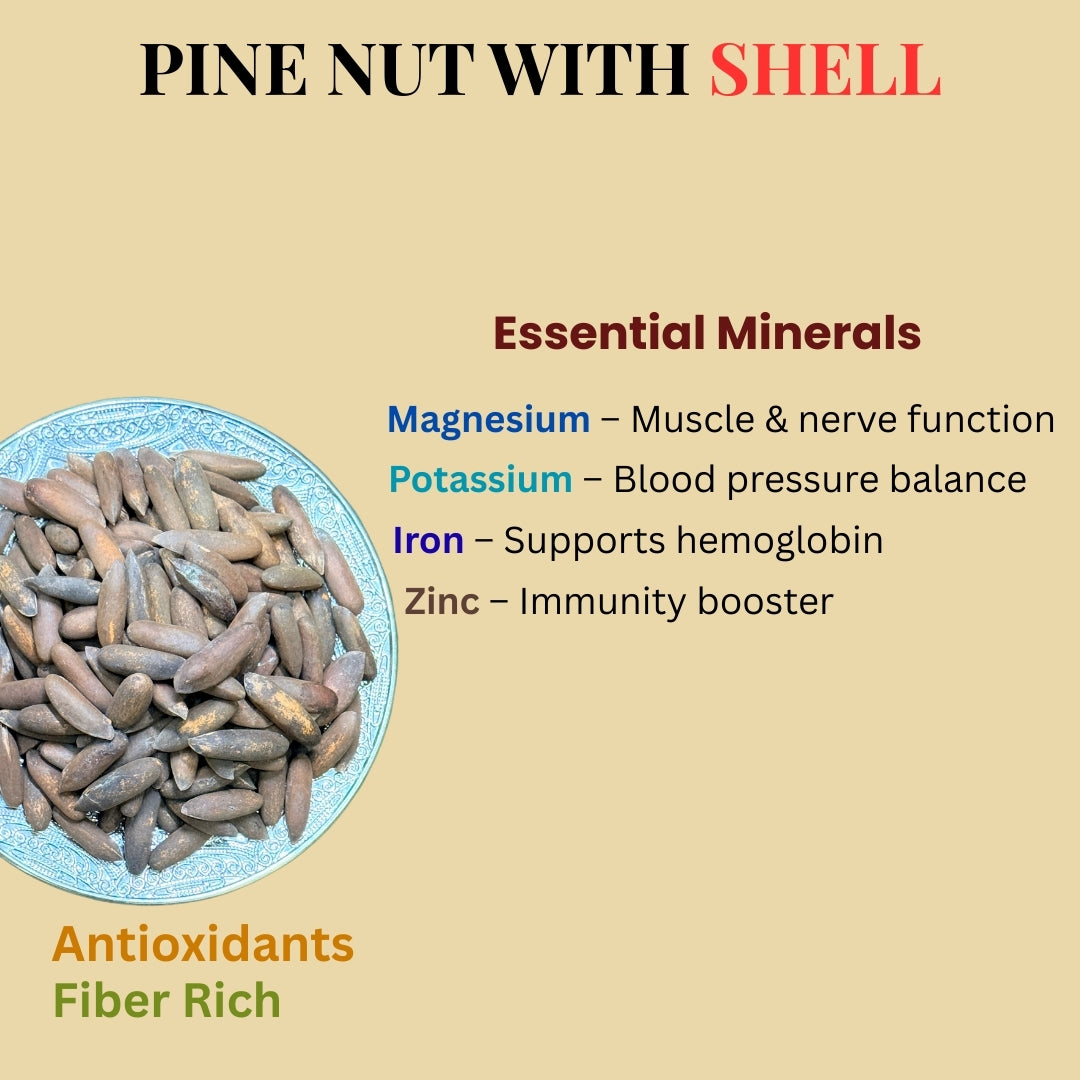
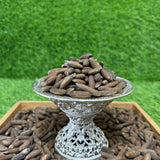
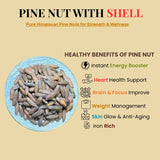
Chilgoza pine nuts in the shell, from high-altitude Himalayan forests. Every cone is brought down by someone climbing the tree — that, and nothing else, is why chilgoza costs what it does.
Hand PickedClimbers, not machines
Soft ShellOpens with a press
CheaperThan shelled
Keeps LongerShell protects it
Highlights
- Hand-harvested from high-altitude pine forests
- Soft shell — opens with a light press, no nutcracker
- Considerably cheaper than shelled chilgoza
- Keeps far longer than shelled kernels
- Soft, buttery, faintly resinous kernel
- Dispatched from Pampore, Kashmir, with GST invoice
Why chilgoza is priced the way it is
Chilgoza cones grow near the tops of tall pines in remote forests. To harvest them, someone climbs the tree and brings the cones down by hand — every single cone. No mechanised shaker, no orchard rows, no shortcut anyone has found in centuries.
Add a short season and trees that take decades to start bearing, and you have the whole explanation. It is difficulty, not branding.
Expect soft, not crunchy
First-time buyers often expect a firm nut. Chilgoza is tender and buttery with a faint pine note — that softness is correct, not a sign of age.
| Detail |
Specification |
| Product |
Chilgoza pine nuts, in shell |
| Harvest |
Hand-picked from high-altitude pine forests |
| Shell |
Soft — opens by hand or teeth |
| Character |
Soft, buttery, faintly resinous |
| Pack sizes |
250g · 500g |
| Storage |
Sealed and cool; refrigerate in humid weather |
Questions
Why is chilgoza so expensive?
Cones grow at the tops of tall pines in remote high-altitude forests and are brought down by climbers by hand. There is no mechanised harvest, the season is short, and trees take decades to bear.
In shell or shelled?
In shell costs considerably less and keeps much longer. Shelled kernels cost more because removing the shell is slow manual work. For casual snacking, in shell is the sensible buy.
How do I open them?
The shell is soft and thin. Press between thumb and finger, or crack between your teeth — traditionally they are opened as you eat.
What do they taste like?
Soft, buttery and faintly resinous. The texture is tender rather than crunchy, which surprises people expecting something firm.
Ask us on WhatsApp