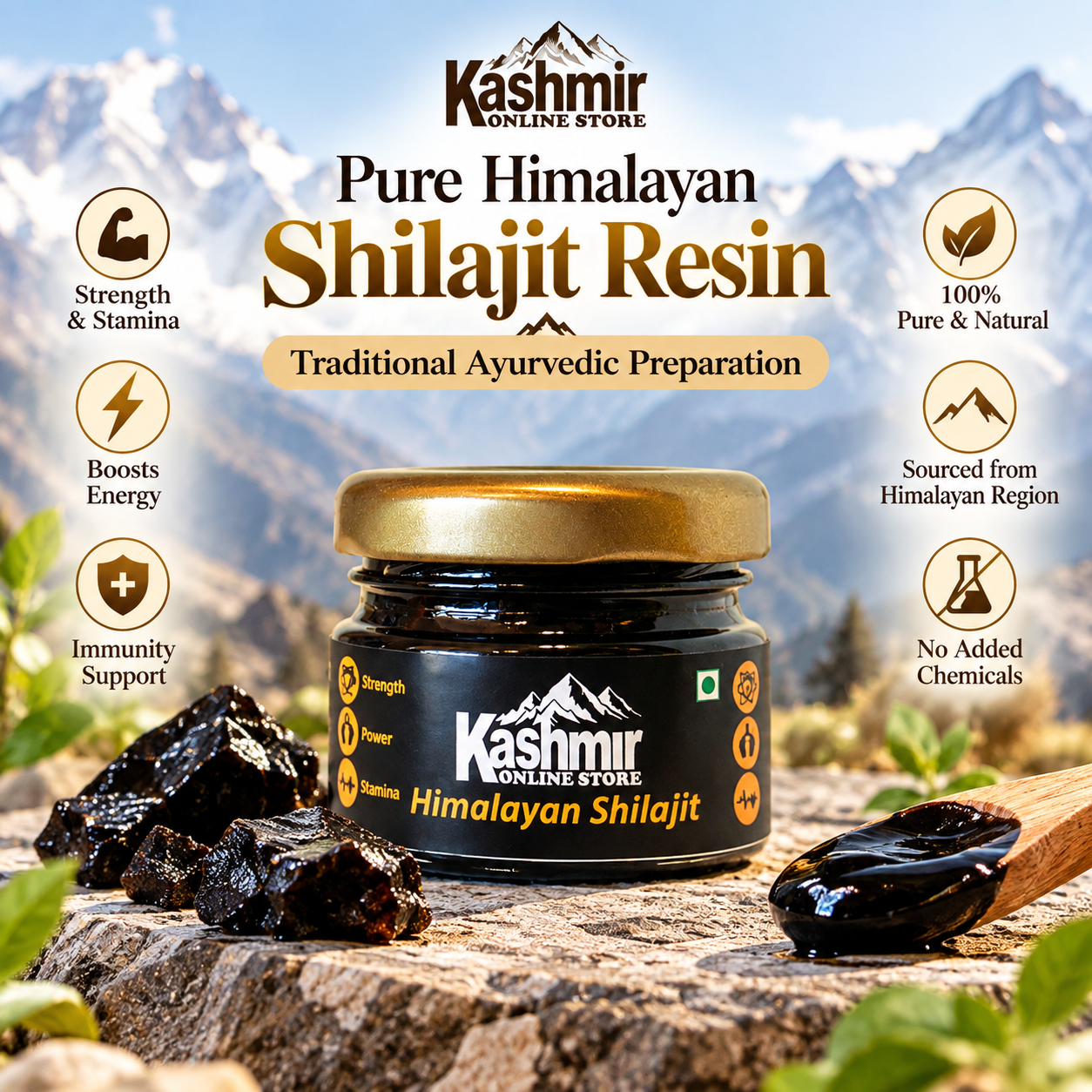
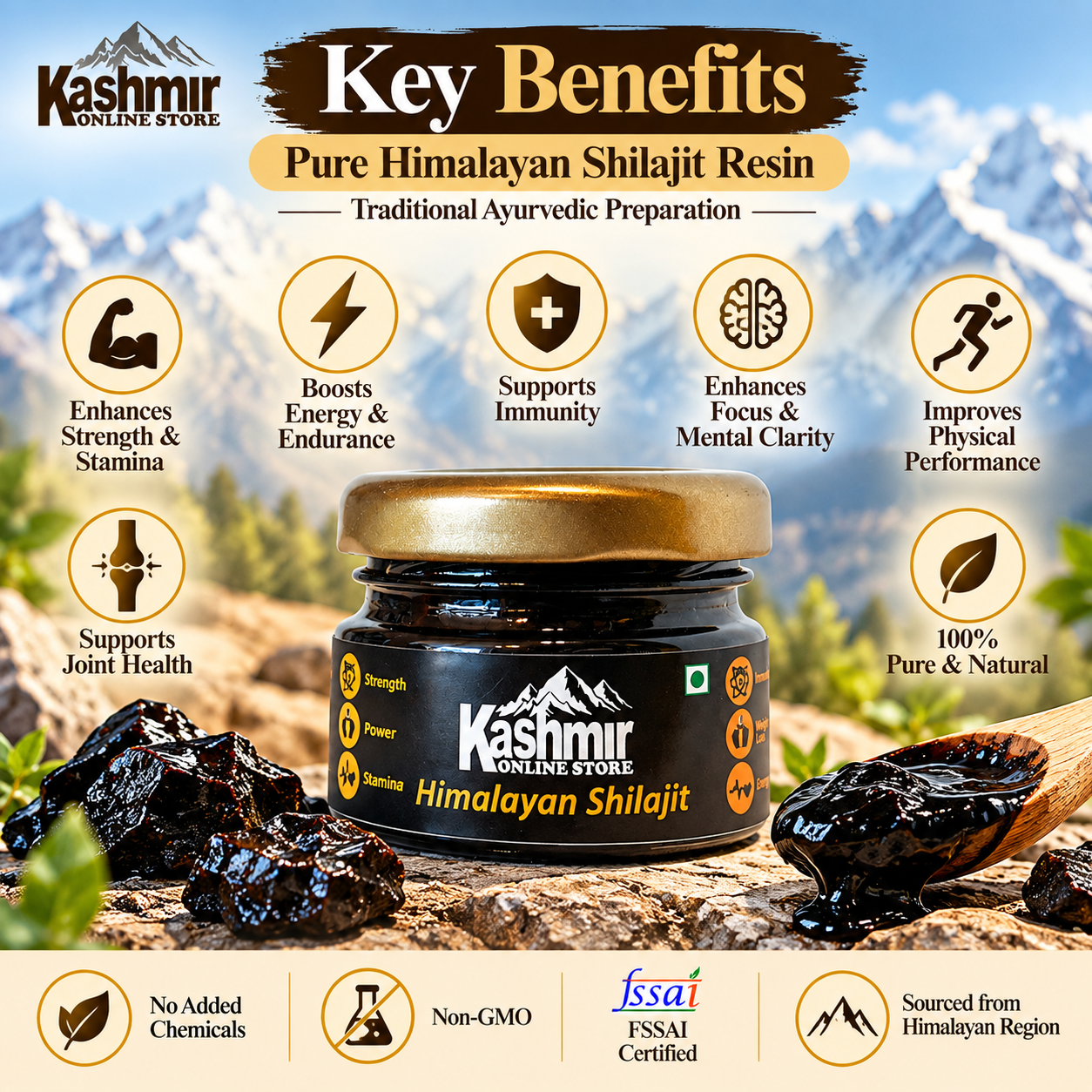
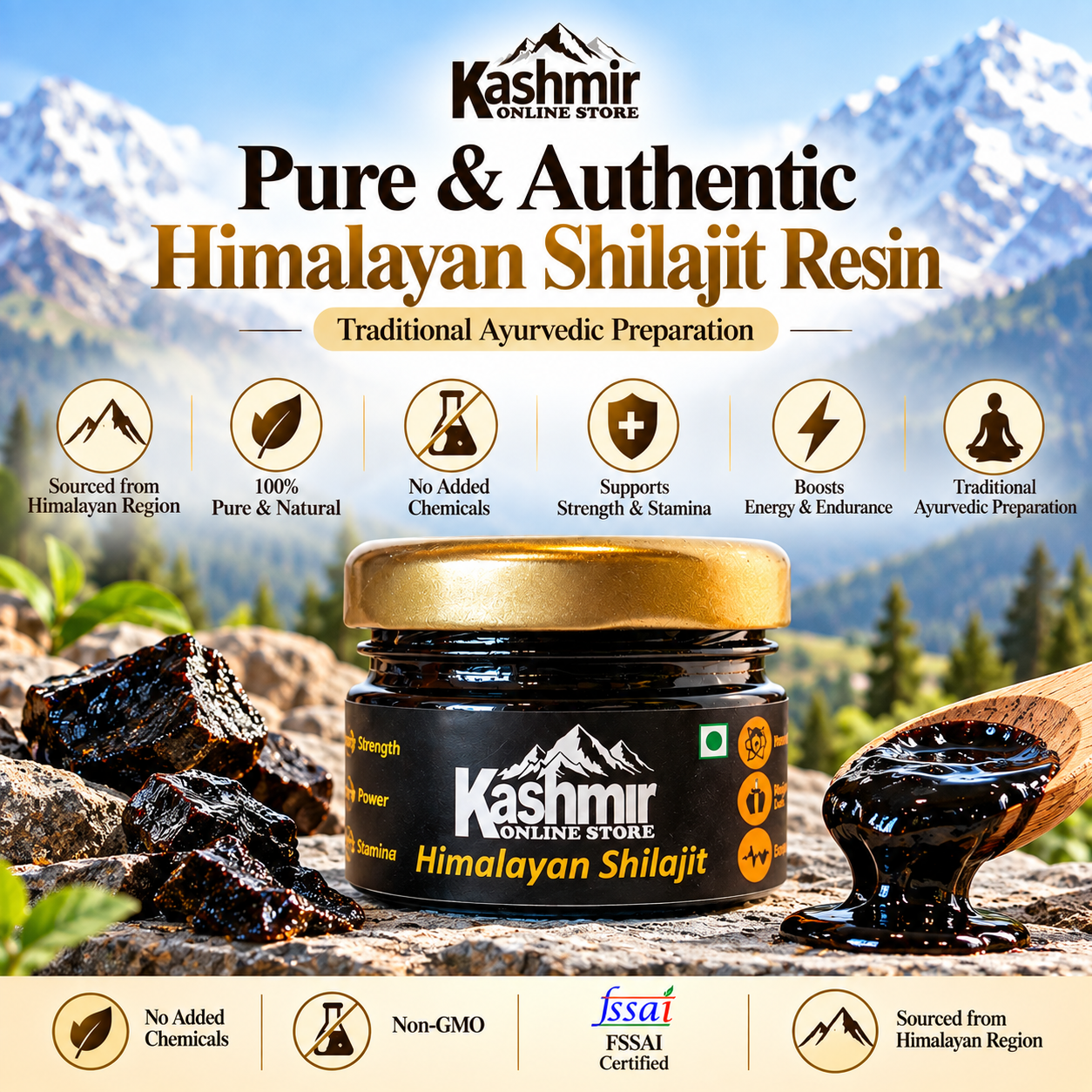
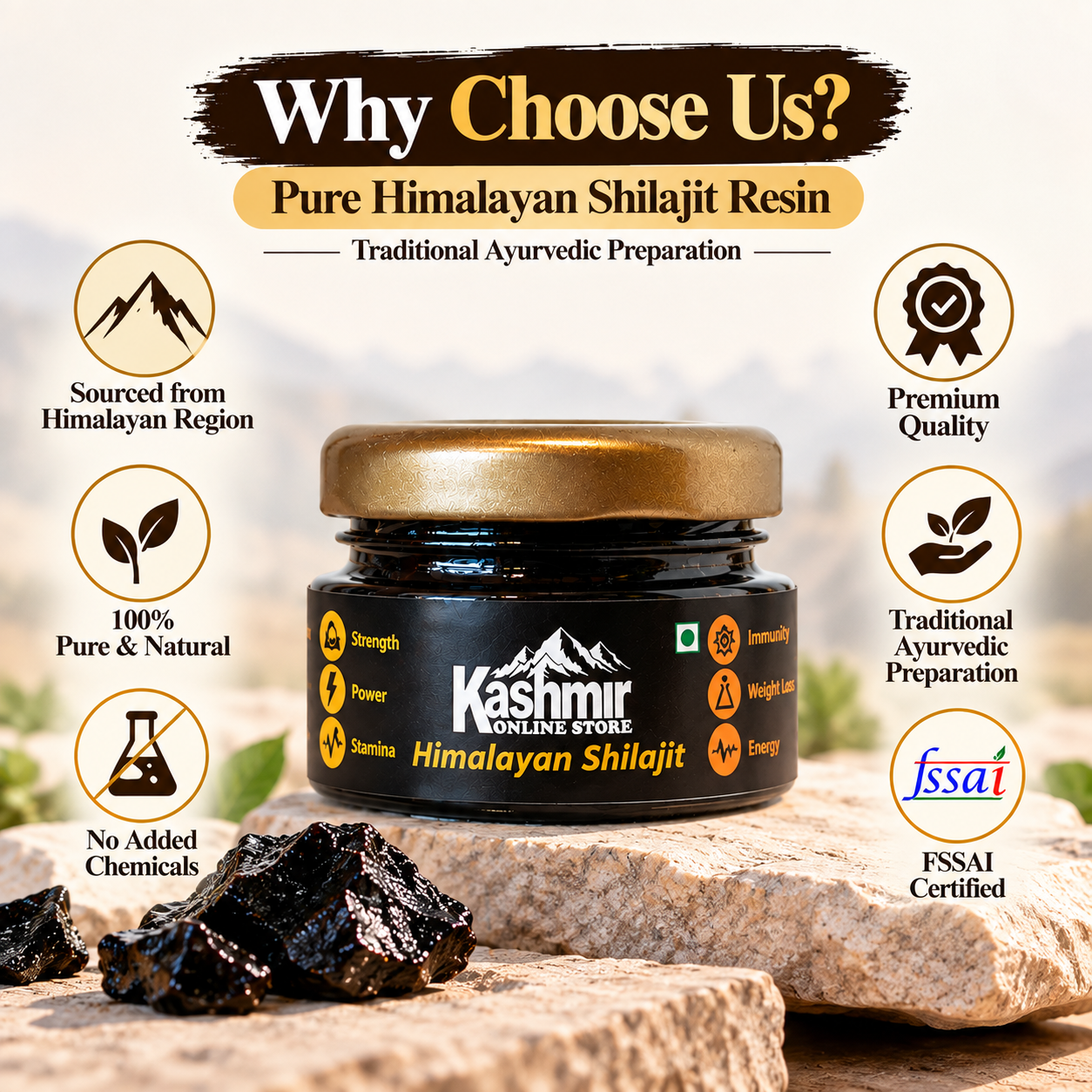
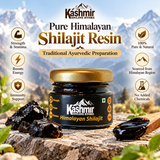
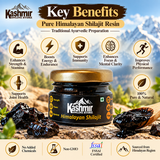
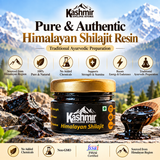
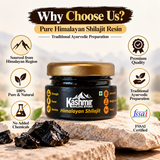
A dark, sticky resin collected from high-altitude Himalayan rock and used in traditional Ayurvedic practice. Natural material, so it varies between batches — and a 20g jar lasts a very long time.
Resin Form
Not powder or capsule
Rice-Grain Dose
Traditionally measured
Natural Material
Batches vary
What It Is
Collected from rock, not manufactured
Shilajit is a dark resinous substance that seeps from rock faces at high altitude and is gathered by hand, then purified. It is a natural material rather than a formulated product, and it has a long history of use in traditional Ayurvedic practice.
Because it comes from rock rather than a factory line, colour, stickiness and firmness differ from batch to batch. That variation is normal and expected. A supplier whose jars look identical every single time is worth more scrutiny than one whose do not.
Practical Reality
It goes hard in winter. Nothing is wrong.
"Cold firms it, warmth softens it. That is just what resin does."
This is the single most common message we get about shilajit. In a cold room the resin sets firm enough that it seems impossible to get any out of the jar, and people assume they have been sent a bad batch.
They have not. Warm the closed jar between your hands for a minute, or stand it in warm water, and it becomes workable again. In summer the opposite happens and it turns noticeably softer. Both are normal.
Side By Side
Resin or liquid drops
Consideration
Resin
Liquid Drops
Form
Thick sticky resin in a jar
Pre-diluted, dropper bottle
Measuring
By eye, rice-grain sized
Counted drops
Convenience
Needs warming and handling
Ready to use
Travel
Awkward
Easy
Suits
Traditional users
Anyone wanting it simple
Using It
Warm, measure, dissolve
Warm the jar in your hands for a minute if the resin has set firm.
Take a portion the size of a grain of rice on a clean dry spoon. Follow the guidance printed on the pack.
Dissolve it in warm milk or water and stir until it disperses. It will not dissolve instantly in cold liquid.
Close the jar tightly and keep it at room temperature, away from direct sun. Always use a dry spoon.
Please note: this is a traditional Ayurvedic preparation, not a medicine, and it is not intended to diagnose, treat, cure or prevent any condition. If you are pregnant or nursing, taking prescribed medication, managing a health condition, or considering it for a child, speak to a qualified doctor before use.
Key Points
At a glance
Resin form, collected from Himalayan rock.
Traditionally used in Ayurveda.
Rice-grain sized portion at a time.
Dissolve in warm milk or water.
Firms in cold, softens in warmth — normal.
Colour and texture vary by batch.
Available 20g and 50g.
Dry spoon; keep the jar closed.
Buying From Kashmir Online Store
What we will and will not tell you
We make no medical or curative claims for it.
We explain the texture changes rather than fielding complaints later.
We say plainly that batches vary, because they do.
Dispatched from Pampore, Kashmir.
GST invoice on every order, delivery across India.
Product Specifications
The details that matter
Attribute
Details
Product
Shilajit resin
Form
Thick resin in a sealed jar
Traditional dose
Portion the size of a grain of rice
How taken
Dissolved in warm milk or water
Pack sizes
20g · 50g
Storage
Closed, room temperature, out of sunlight
Dispatch
From Pampore, Kashmir, with GST invoice
Resin or drops — which suits you?
Tell us how you would take it day to day and we will point you to the form that actually fits.
A dark, sticky substance collected from high-altitude rock in the Himalayas, purified and sold in resin form. It has been used in traditional Ayurvedic practice for a very long time. It is a natural material, not a manufactured supplement.
How much should I take?
Traditionally a portion about the size of a grain of rice, dissolved in warm milk or water. Follow the guidance on the pack. More is not better, and a 20g jar lasts a long time at that dosage.
Why does it get hard in cold weather?
Resin firms up in cold and softens in warmth, which is normal. Warm the closed jar in your hands or stand it in warm water for a minute and it becomes workable again.
Why does it vary between jars?
Because it is a natural material collected from rock rather than made to a formula. Colour, stickiness and firmness differ between batches. Complete uniformity would be more suspicious than variation.
Who should not take it?
Speak to a doctor before taking it if you are pregnant or nursing, taking prescribed medication, managing a health condition, or giving it to a child. It is a traditional preparation, not a treatment for any condition.