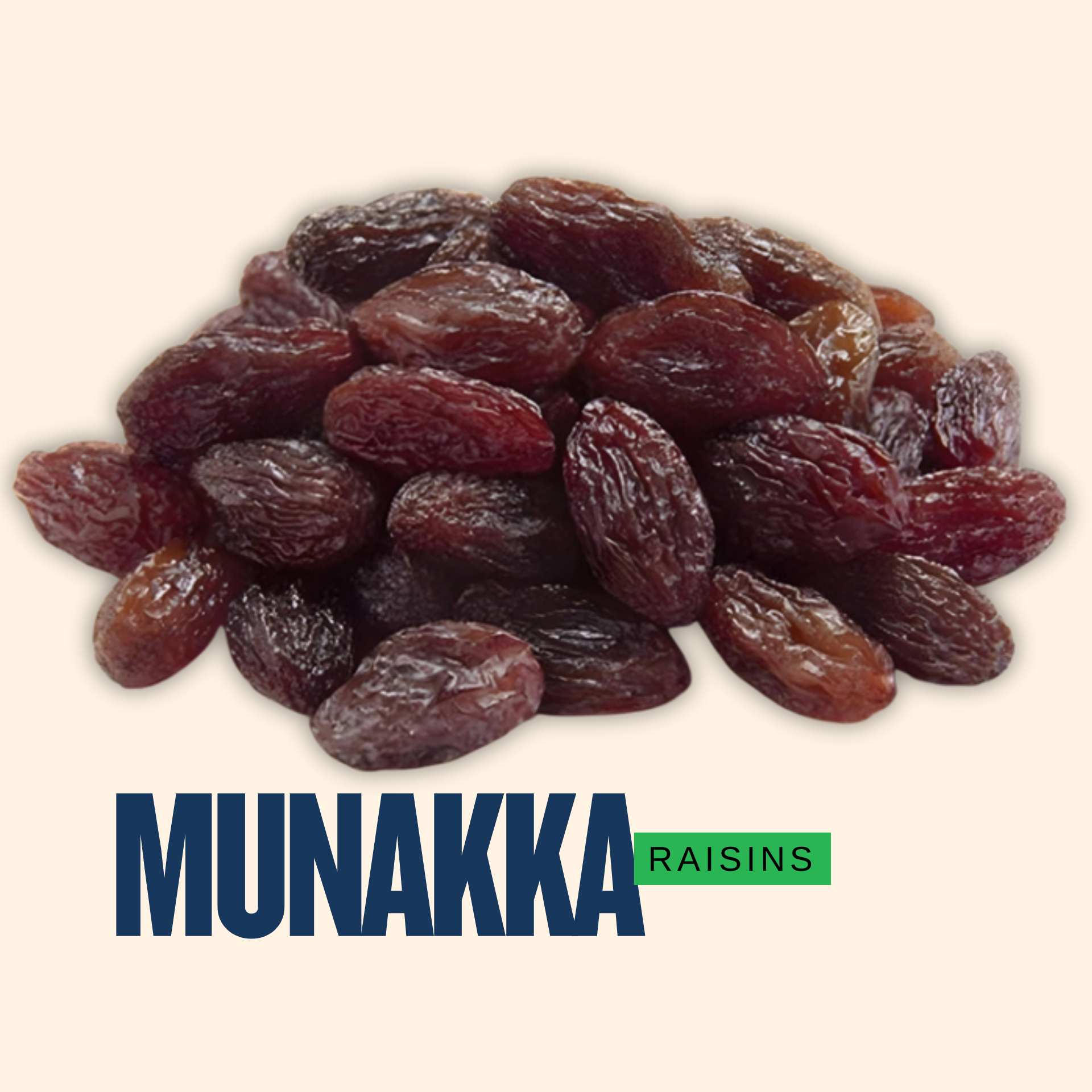
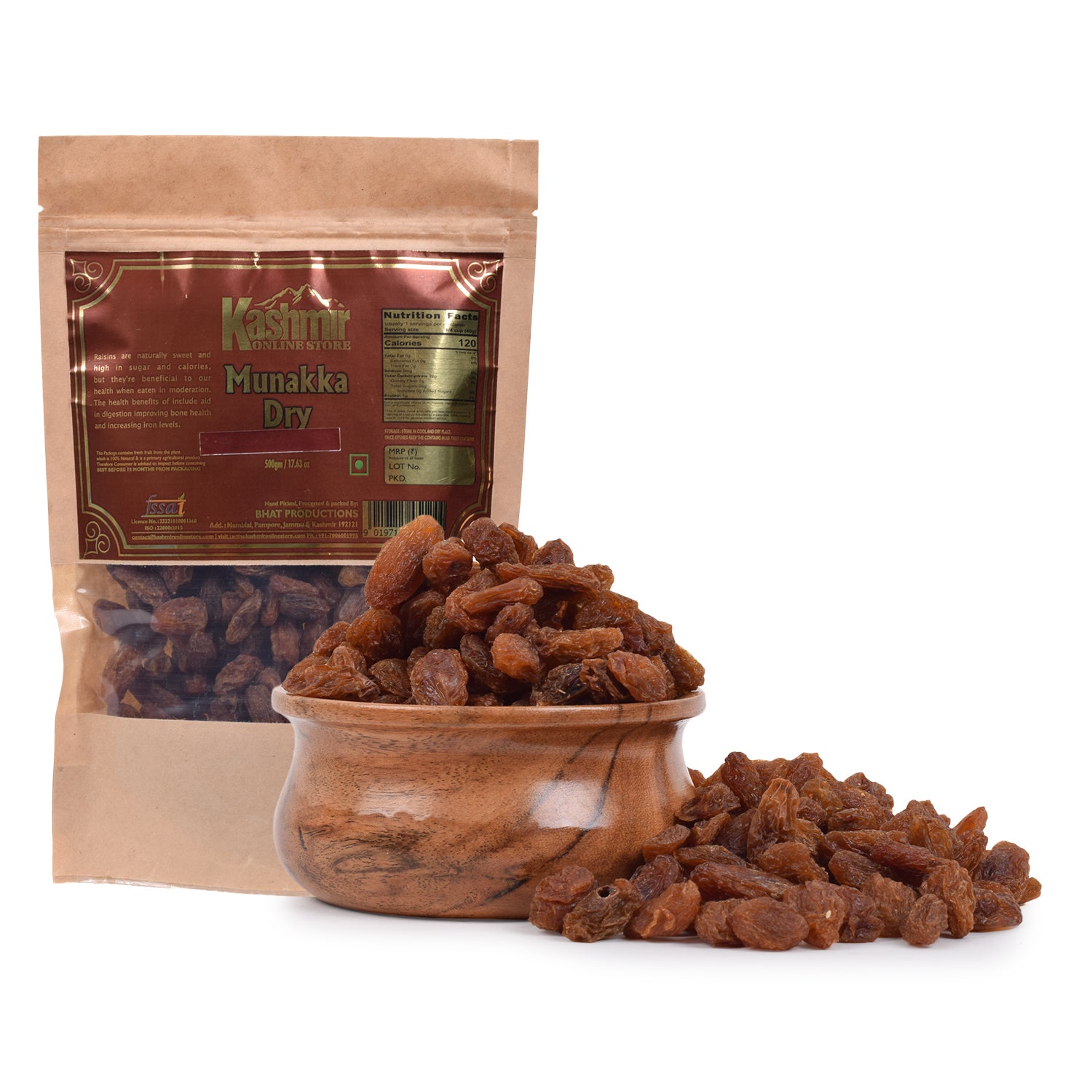
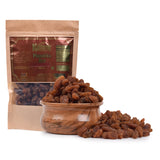
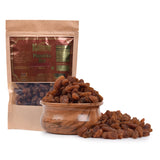
Not a bigger kishmish. A different thing entirely.
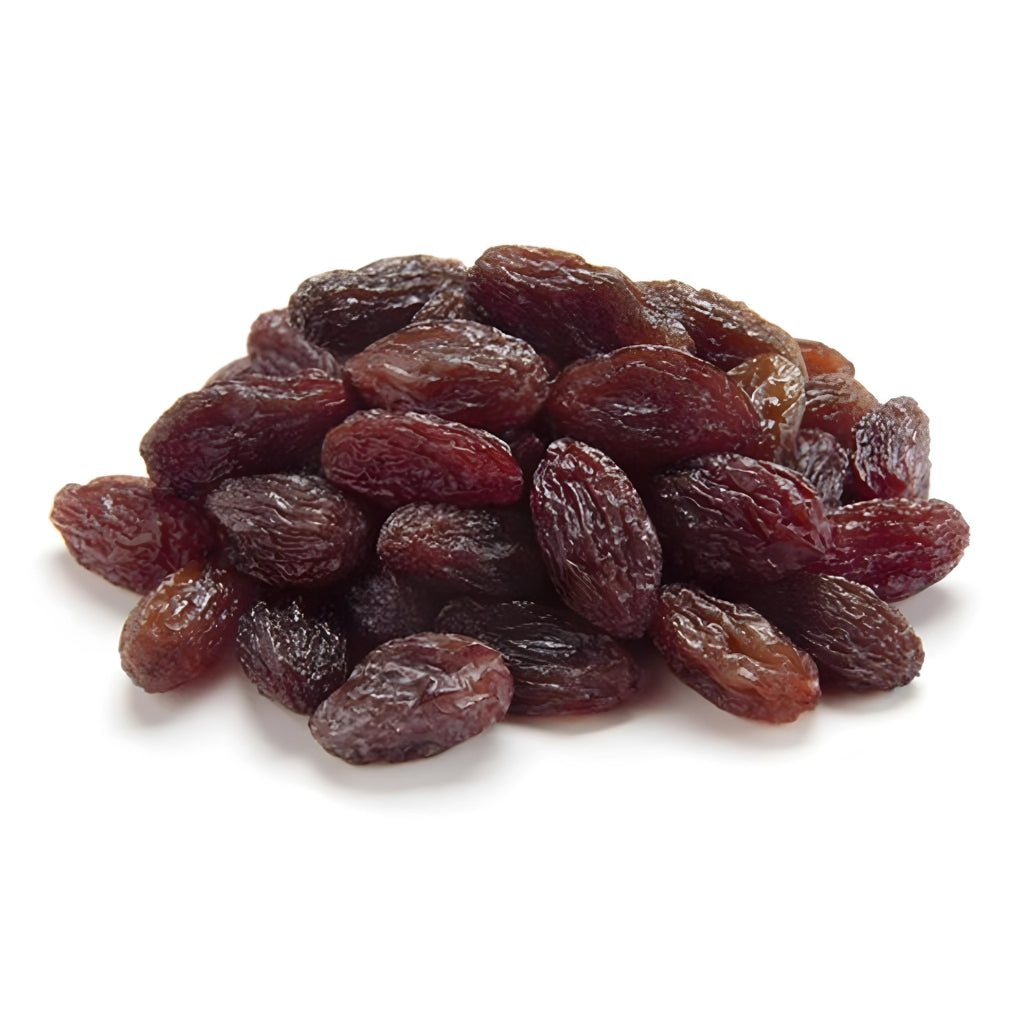
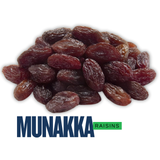
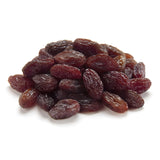
Large, dark and dried with the seeds in, from a different grape than the small seedless raisins. Deeper and more rounded in flavour, and traditionally soaked rather than snacked on.
Large & Dark
Seeds left in
Rounded Flavour
Not sharply sweet
Soak First
The traditional way
What You Are Buying
Munakka is not simply large kishmish
People often assume munakka is just an oversized raisin. It is not. It comes from a different grape, is dried differently, and keeps its seeds — and every one of those differences shows up in the taste.
Where ordinary kishmish is brightly, simply sweet, munakka is deeper and more rounded, with a note closer to a dark fruit or a good wine than to sugar. The skin is thicker, the flesh more substantial, and one munakka is a mouthful where one raisin is barely a bite.
How It Is Eaten
This is a soaking raisin, not a snacking one
"Dry, it is leathery. Soaked, it is a different fruit."
Straight from the pack munakka is large and chewy with a thick skin — edible, but not what it is meant for. Indian households have always soaked it: a few pieces in water or milk overnight, eaten in the morning.
Soaked, it plumps up, the skin softens, and the flavour opens right out. The seeds separate easily at that point if you would rather not eat them. This is also why munakka is kept for winter preparations rather than being scattered through everyday cooking.
Side By Side
Which raisin you actually want
Feature
Munakka
Golden Kishmish
Black Kishmish
Size
Large
Small
Small
Seeds
In
Seedless
Seedless
Flavour
Deep, rounded
Bright, sweet
Firmer, slightly tart
Eaten
Soaked
Dry or in cooking
Dry or in cooking
Best for
Soaking, winter use
Pulao, kheer, sweets
Baking, snacking
Using Them
The overnight habit
Soak a few overnight in water or milk, and eat them first thing in the morning — the traditional preparation.
Drink the soaking liquid. It picks up the sweetness and colour of the fruit and is part of the ritual.
Remove the seeds if you like — after soaking they come away easily, though most people simply eat them.
Use a dry spoon and reseal. Munakka is moister than ordinary raisins and goes sticky in humidity.
Key Points
At a glance
Large, dark, thick-skinned.
Dried with the seeds in.
Different grape from ordinary kishmish.
Deep, rounded, wine-like sweetness.
Traditionally soaked overnight.
Not the raisin for scattering in pulao.
Available 250g, 500g, 1kg and 2kg.
Dry spoon, sealed, refrigerate in humidity.
Buying From Kashmir Online Store
What we will and will not tell you
We explain that munakka is a different fruit, not a bigger raisin.
We tell you it wants soaking rather than letting you find out.
Sorted and packed by us, not bought pre-packed.
FSSAI registered, dispatched from Pampore, Kashmir.
GST invoice on every order, delivery across India.
Product Specifications
The details that matter
Attribute
Details
Product
Munakka raisins (abjosh), seeds in
Size
Large, considerably bigger than kishmish
Flavour
Deep and rounded rather than sharply sweet
Preparation
Traditionally soaked overnight
Pack sizes
250g · 500g · 1kg · 2kg
Storage
Sealed, dry spoon; refrigerate in humidity
Dispatch
From Pampore, Kashmir, with GST invoice
Munakka or ordinary kishmish?
Tell us whether it is for soaking or for cooking and we will point you to the right one.
Munakka is much larger, darker and dried with its seeds still in, from a different grape than the small seedless raisins. The flavour is deeper and more rounded rather than sharply sweet, and the texture thicker.
Does it have seeds inside?
Yes, dried whole with its seeds, which is part of what defines it. Most people eat them along with the fruit; after soaking they separate easily if you prefer to remove them.
Why is it soaked before eating?
It is large and leathery when dry. Soaking overnight in water or milk plumps it up, softens the skin and makes it far more pleasant to eat — the traditional preparation.
Can I use it in cooking?
You can, but it is not the usual choice. Munakka is large and seeded, so it does not scatter through a pulao or kheer the way golden kishmish does.
How should I store it?
Sealed in a cool, dry place, using a dry spoon. Being large and moist it can go sticky in humid weather, so refrigerate through the monsoon.