Cooked by the sun, over days, not by a flame in minutes.
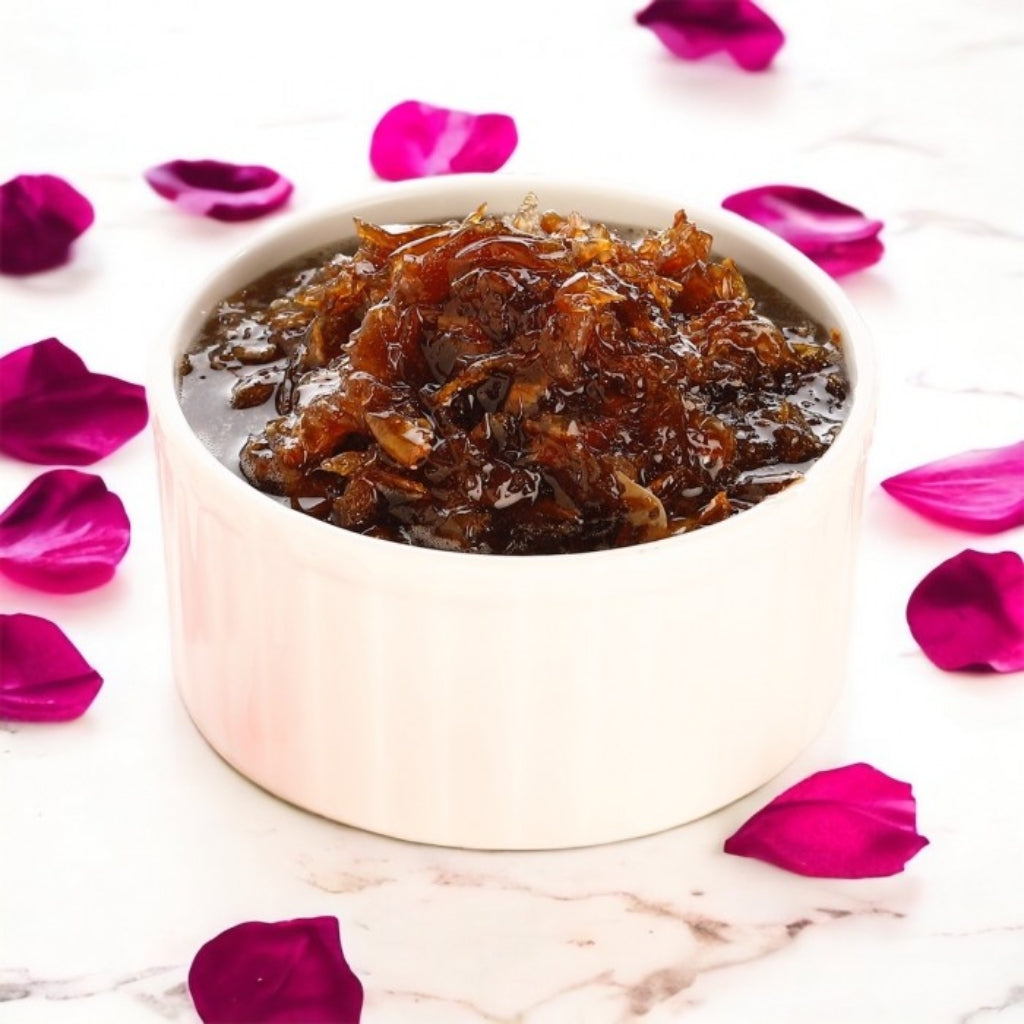
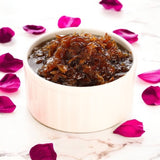
Rose petals layered with sugar and left in the sun until they turn into a soft, dark, fragrant preserve. Slow is the whole method — heat is what destroys the rose.
Sun Cooked
Days, not minutes
Rose Forward
Aroma survives
Shelf Stable
No preservatives needed
How It Is Made
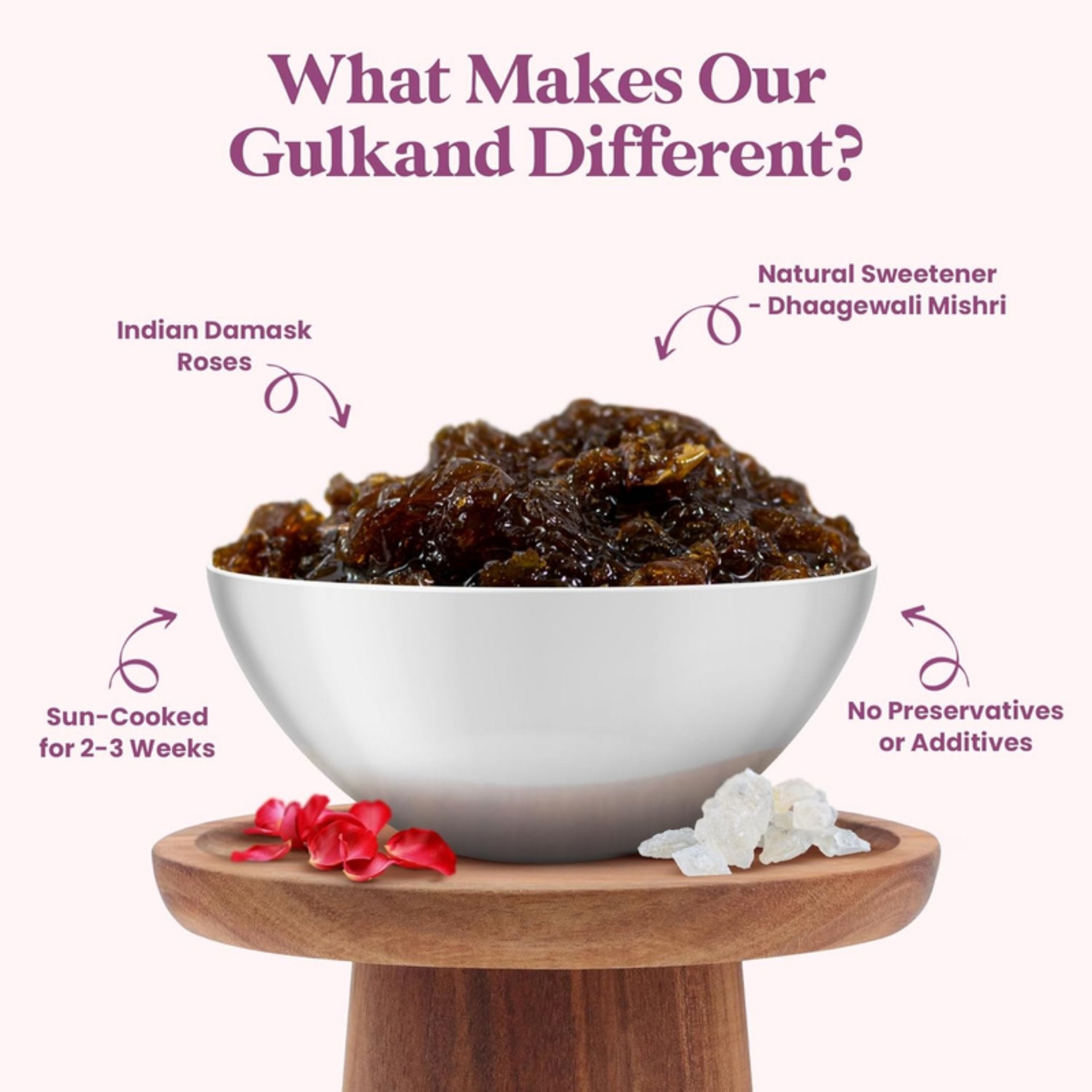
The sun does the cooking
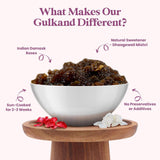
Gulkand is one of the oldest preserves in Indian kitchens and the traditional method has almost nothing to it: rose petals and sugar, layered in a jar, left in the sun. Over days the sugar draws the moisture out of the petals, the mixture darkens and softens, and it becomes gulkand.
No flame is involved, and that is deliberate. Rose aroma is fragile and heat drives it off — which is exactly what happens in the quick boiled versions that fill most jars on a shop shelf.
Honest Answer
Yes, there is a lot of sugar in it
"Sugar is not an additive here. It is the preservation method."
People sometimes open a jar of gulkand and are surprised by how sweet it is. It is worth understanding why. The sugar is what pulls water out of the petals and stops anything growing in the jar — that is how gulkand keeps for months at room temperature with no preservatives and no refrigeration.
A low-sugar gulkand is not really a thing; it would simply spoil. What we can tell you is that a spoonful goes a long way, and that this is a preserve to be eaten by the teaspoon rather than the bowl.
Side By Side
Sun-cooked or quick-boiled
Feature
Sun-Cooked
Quick-Boiled
Time taken
Days in the sun
Minutes on a flame
Rose aroma
Largely retained
Much of it driven off
Petal texture
Soft, still recognisable
Broken down
Colour
Deep natural rose-brown
Often colour-corrected
Smell on opening
Rose first
Sugar first
Eating It
A teaspoon at a time
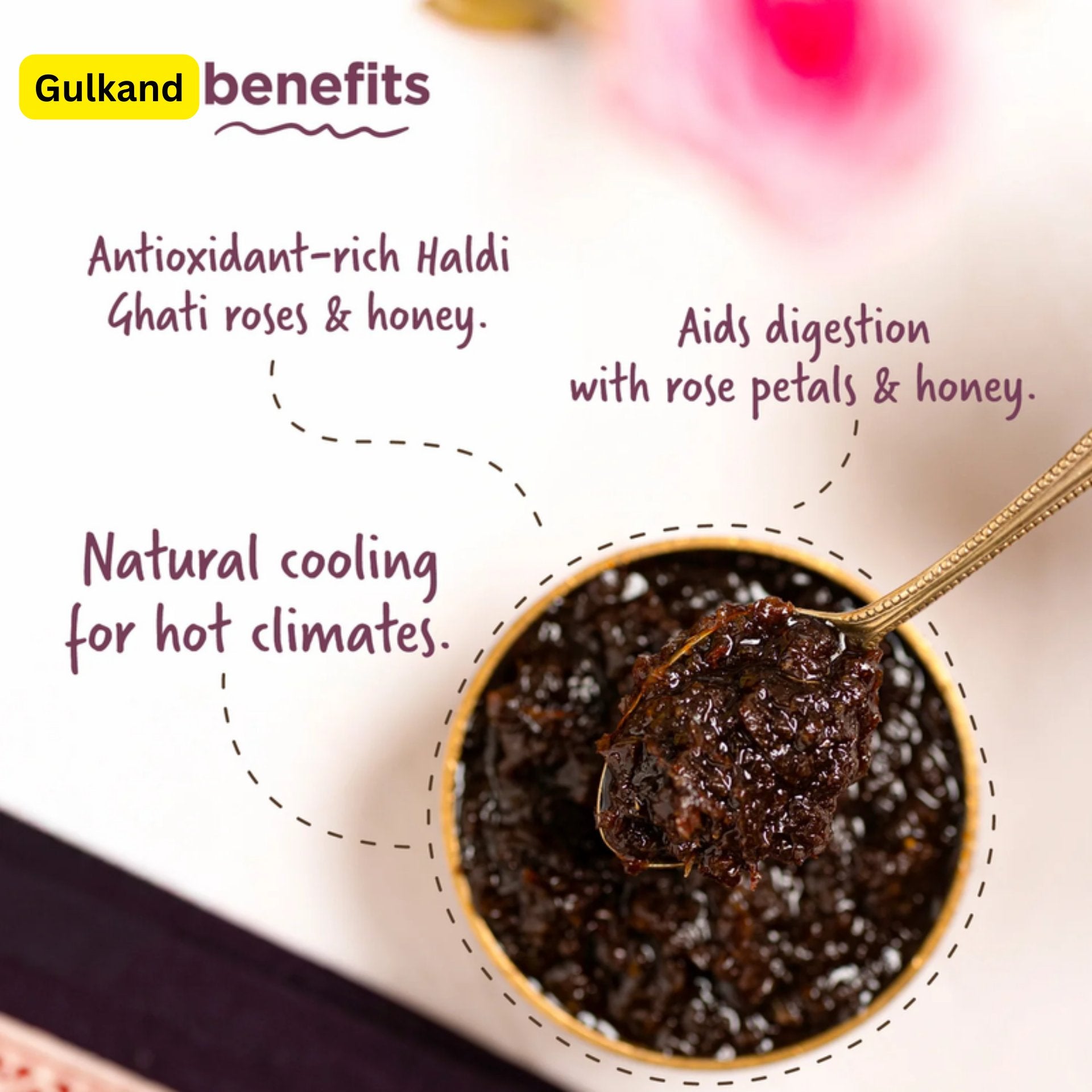
Straight from the jar. A teaspoon on its own is the traditional way, particularly through summer.
Stirred into milk, warm or cold, where it turns the glass faintly pink and rose-scented.
Spread on bread or paratha, or folded into paan, kulfi, lassi and rose desserts.
Always a dry spoon. Water introduced on a wet spoon is the one thing that will spoil an otherwise stable jar.
Key Points
At a glance
Rose petals and sugar, sun-cooked.
No flame, so the aroma survives.
Petals still soft and recognisable.
Sugar is the preservation method.
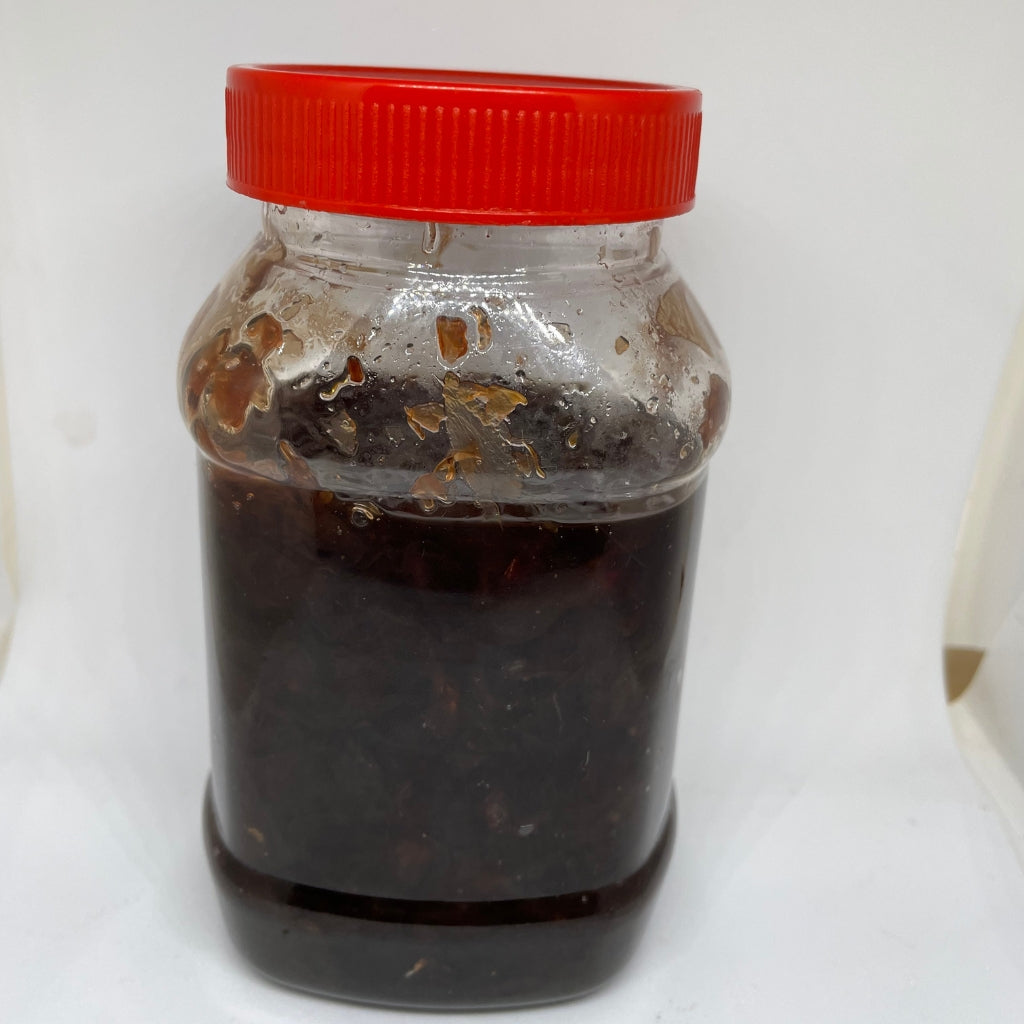
Keeps at room temperature.
Eaten by the teaspoon.
Available 500g, 1kg and 2kg.
Dry spoon, sealed jar.
Buying From Kashmir Online Store
What we will and will not tell you
We tell you plainly that it is a sugar preserve.
We explain the method rather than dressing it up.
Made and packed by us, not bought pre-packed.
FSSAI registered, dispatched from Pampore, Kashmir.
GST invoice on every order, delivery across India.
Product Specifications
The details that matter
Attribute
Details
Product
Rose petal preserve (gulkand)
Method
Sun-cooked over days, no flame
Ingredients
Rose petals and sugar
Serving
A teaspoon at a time
Pack sizes
500g · 1kg · 2kg
Storage
Sealed at room temperature; dry spoon only
Dispatch
From Pampore, Kashmir, with GST invoice
Not sure how much to order?
A 500g jar lasts most households a long time at a teaspoon a day. Message us if you are buying for a shop or for gifting.
A traditional preserve made by layering rose petals with sugar and leaving the jar in the sun. The sun draws moisture from the petals over days and the mixture turns into a soft, dark, fragrant jam.
How is sun-cooked different from boiled?
Boiling is faster but heat drives off much of the rose aroma. Sun-cooking takes days and keeps far more of the floral scent, which is why traditional gulkand smells of rose while quick versions often smell mainly of sugar.
How do I eat it?
A teaspoon on its own, stirred into warm or cold milk, spread on bread or paratha, folded into paan, or used in kulfi, lassi and rose desserts.
Why is there so much sugar?
Sugar is what preserves it. It draws water out of the petals and prevents spoilage, which is how the jar keeps for months without refrigeration or additives.
How should I store it?
Sealed at room temperature, always with a clean dry spoon. Moisture from a wet spoon is the main cause of a jar spoiling. Refrigeration is not necessary.