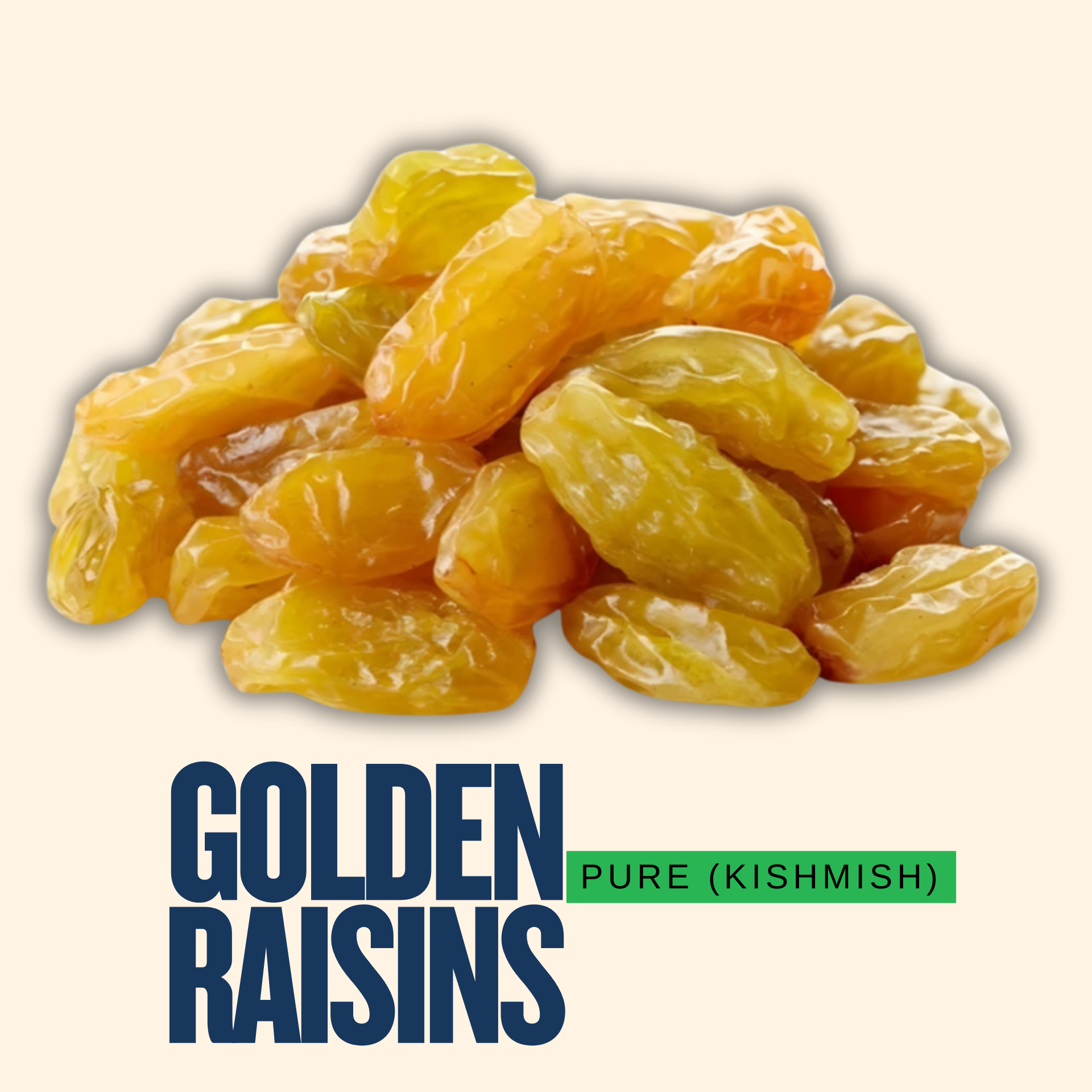
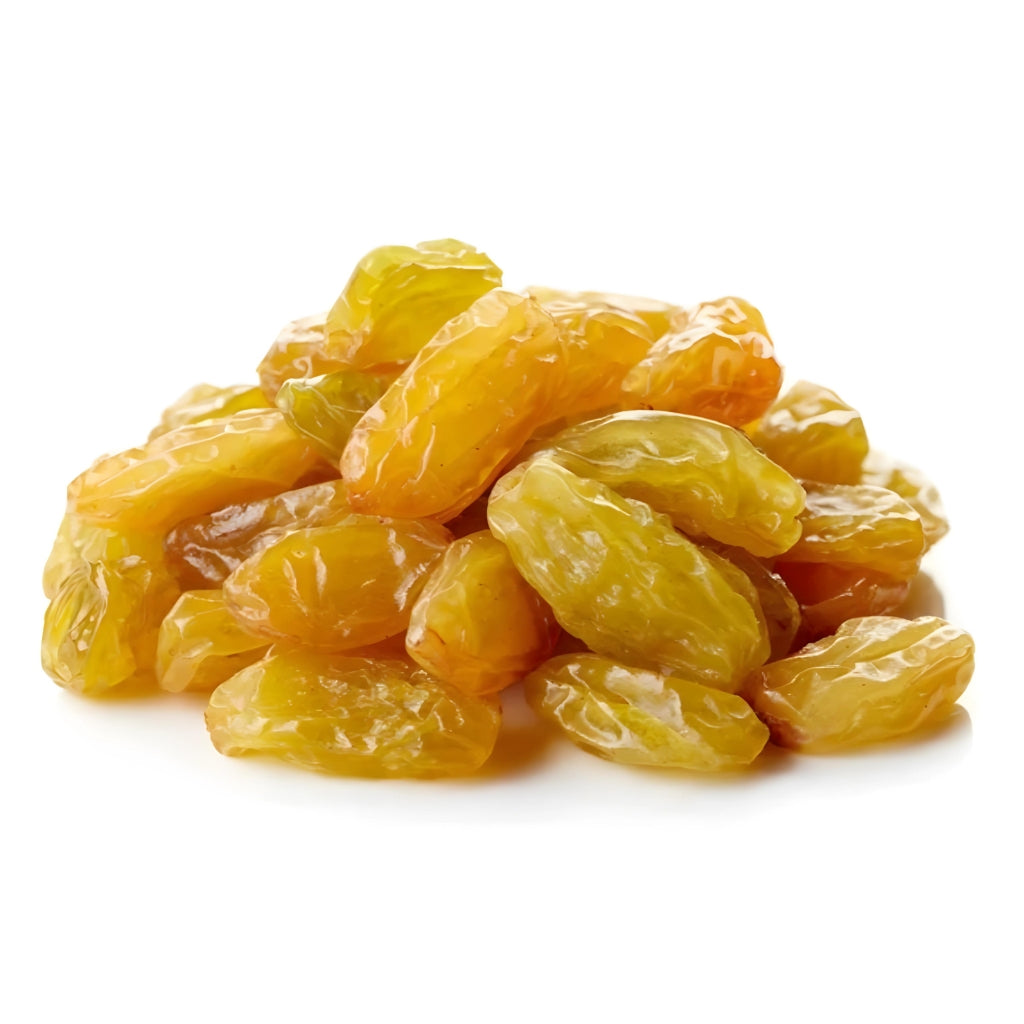
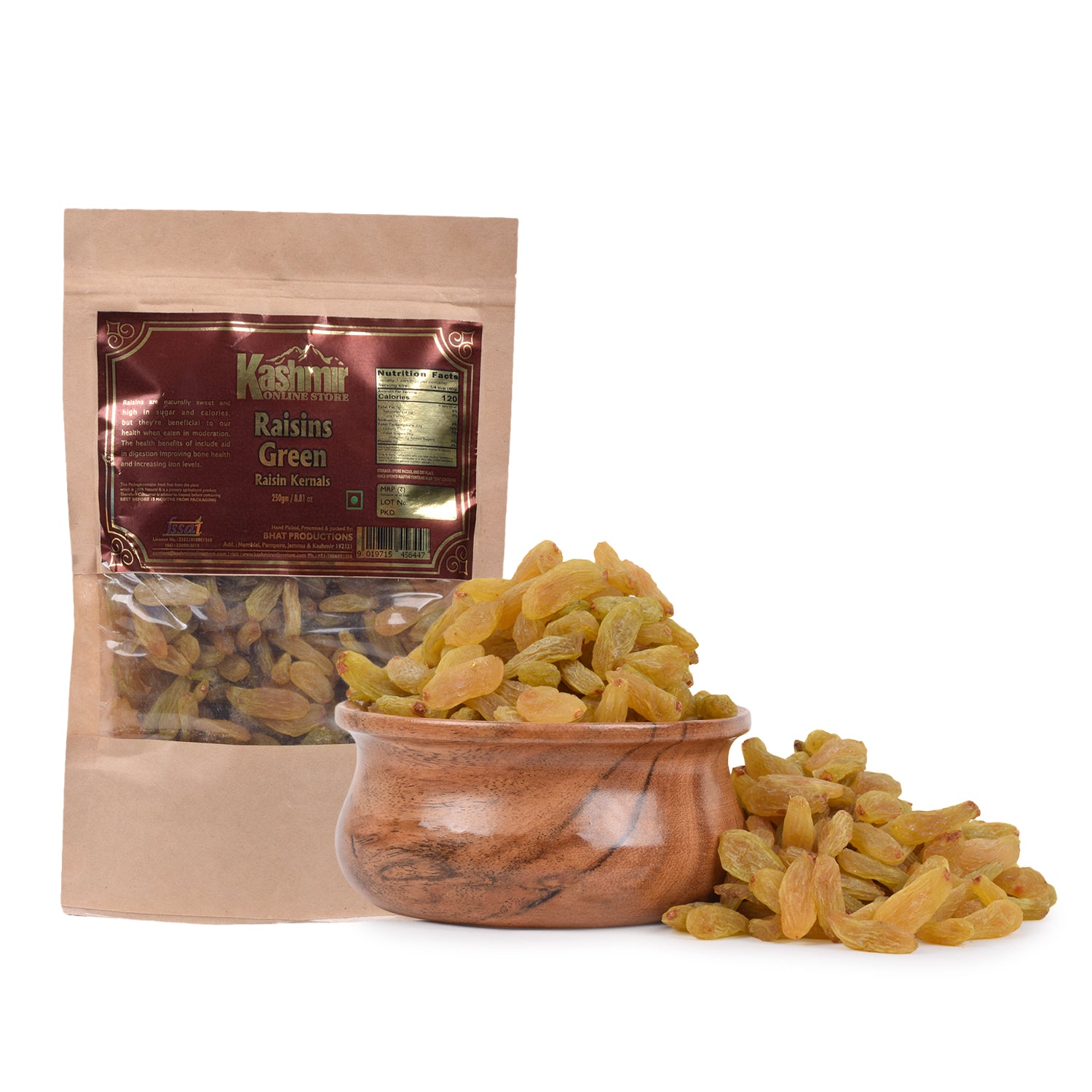
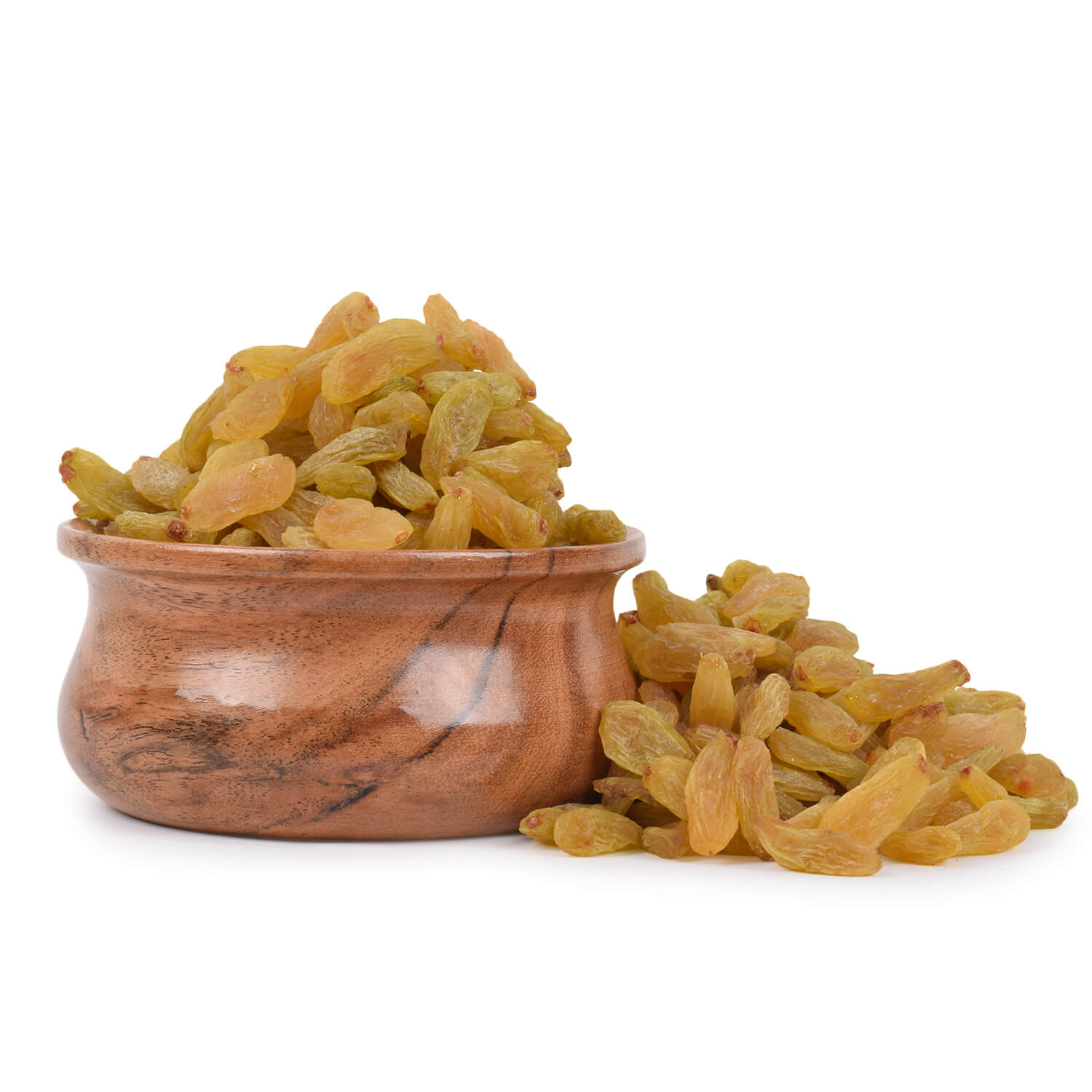
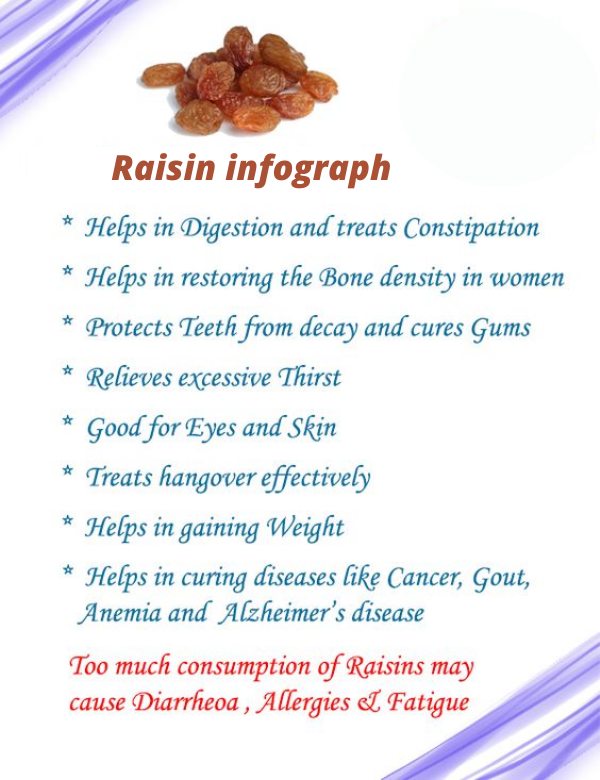
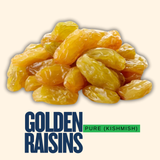
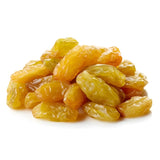
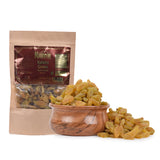
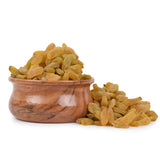
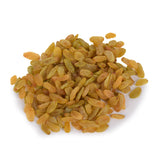
Pale, soft and seedless, with a clean sweetness that lifts a pulao or kheer instead of taking it over. This is the raisin Indian cooking actually calls for.
Clean Sweetness
Does not overpower
Seedless
Nothing to remove
Soft Texture
Ready to use
Why Golden For Cooking
A supporting ingredient, not a competing one
In sheer khurma, pulao, kheer and halwa the raisin has a specific job: little bursts of sweetness against everything else. It is not meant to announce itself. Golden kishmish does that job precisely because its flavour is clean and uncomplicated.
Black raisins carry a tartness and a darker note that pull attention, and in a delicate kheer that can read as a mistake. Golden ones stay in their place, which is exactly why generations of Indian kitchens reach for them.
The Colour
Why some raisins stay pale
"Shade drying keeps them light. Sun drying turns them dark."
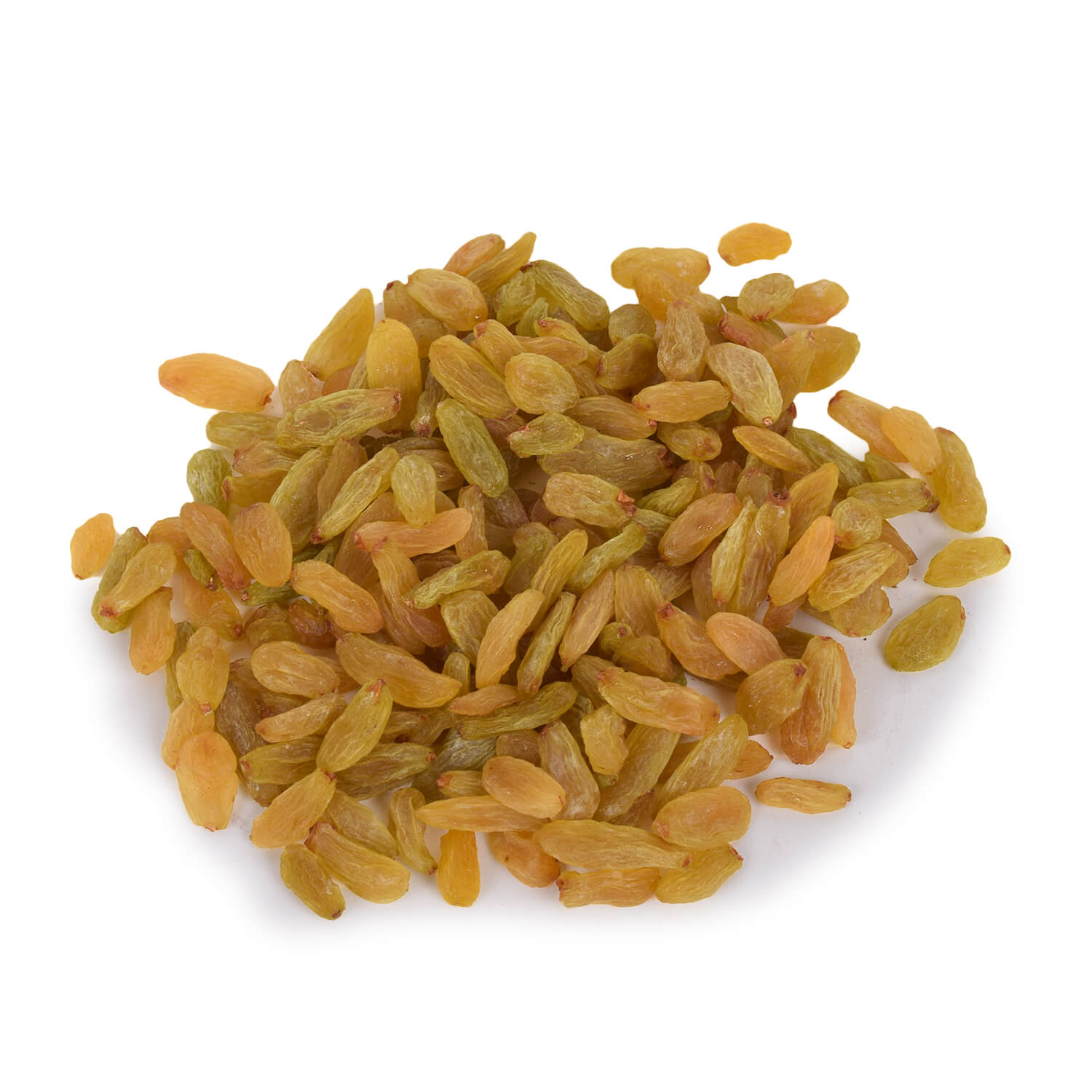
People often assume pale raisins have been treated to look that way. In practice the shade comes down to the grape variety and where it was dried — grapes dried in shade hold a much lighter colour, while open sun turns them progressively darker.
Expect some variation across the pack, from pale straw to deeper gold. That range is normal in naturally dried fruit, and a pack where every single raisin is identically coloured is worth a second thought.
Side By Side
Which raisin you actually want
Feature
Golden Kishmish
Black Kishmish
Munakka
Sweetness
Bright, clean
Less sweet, slightly tart
Deep, rounded
Texture
Soft
Firmer skin
Large, leathery
Seeds
Seedless
Seedless
Seeds in
In cooking
Softens into the dish
Holds its shape
Too large
Best for
Pulao, kheer, sheer khurma
Baking, snacking
Soaking
Using Them
A trick worth knowing
Soak briefly in warm water before adding to a dish. A dry raisin pulls moisture out of the food around it; a plumped one does not.
Fry in ghee for a few seconds when tempering. They swell, turn glossy and taste noticeably richer.
Add near the end of a long-cooked dish so they stay distinct rather than dissolving into it.
Always use a dry spoon. Moisture in the jar is what makes raisins clump and spoil early.
Key Points
At a glance
Pale, soft and seedless.
Clean sweetness that supports a dish.
The standard raisin for Indian sweets.
Colour varies from straw to deep gold.
Easy to eat straight from the pack.
Soak briefly before cooking.
Available 250g, 500g, 1kg and 2kg.
Dry spoon, sealed, cool storage.
Buying From Kashmir Online Store
What we will and will not tell you
We explain why colour varies instead of hiding it.
We tell you which raisin suits which dish.
Sorted and packed by us, not bought pre-packed.
FSSAI registered, dispatched from Pampore, Kashmir.
GST invoice on every order, delivery across India.
Product Specifications
The details that matter
Attribute
Details
Product
Golden raisins (kishmish), seedless
Colour
Pale straw to deep gold, varies naturally
Texture
Soft
Best for
Pulao, kheer, sheer khurma, halwa
Pack sizes
250g · 500g · 1kg · 2kg
Storage
Sealed, cool, dry spoon
Dispatch
From Pampore, Kashmir, with GST invoice
Golden, black or munakka?
Tell us the dish you are making and we will tell you which raisin belongs in it.
The flavour is clean and does not compete. Golden kishmish is sweeter and softer than black raisins, so it lifts a pulao or kheer without adding the tartness and darker note that black raisins bring.
Are they seedless?
Yes, which is why they can be eaten straight from the pack and scattered whole through a dish with nothing to remove.
Why are some raisins golden and others dark?
It depends on the grape and how it was dried. Grapes dried in shade keep a much lighter colour, while sun drying darkens them.
Should I soak them?
Not necessarily. They are soft enough to use as they are. Soaking briefly in warm water before adding to a dish plumps them so they do not draw moisture out of the food around them.
How should I store them?
Sealed in a cool, dry place, always using a dry spoon. Moisture on a spoon is the usual reason a jar of raisins clumps together or spoils early.