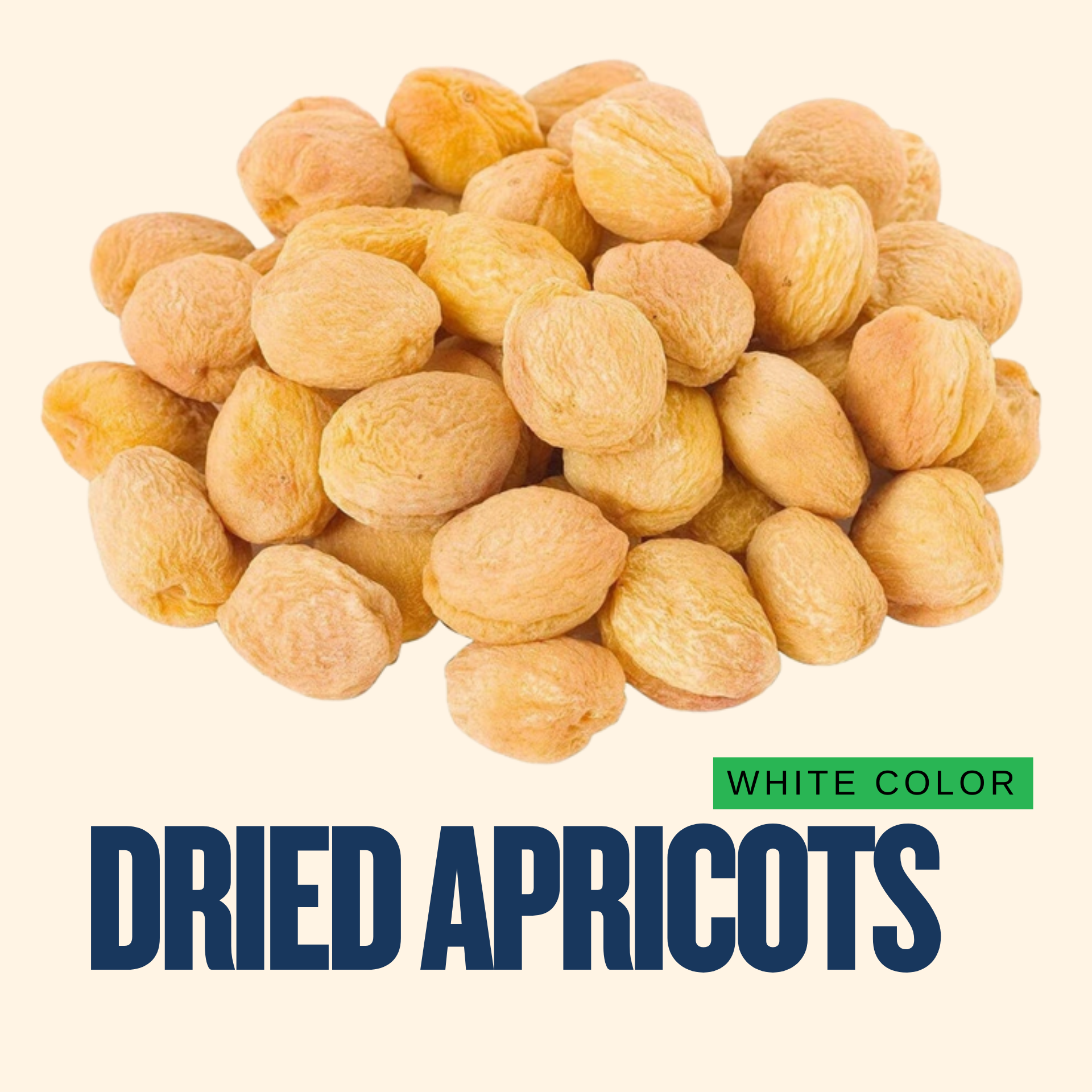
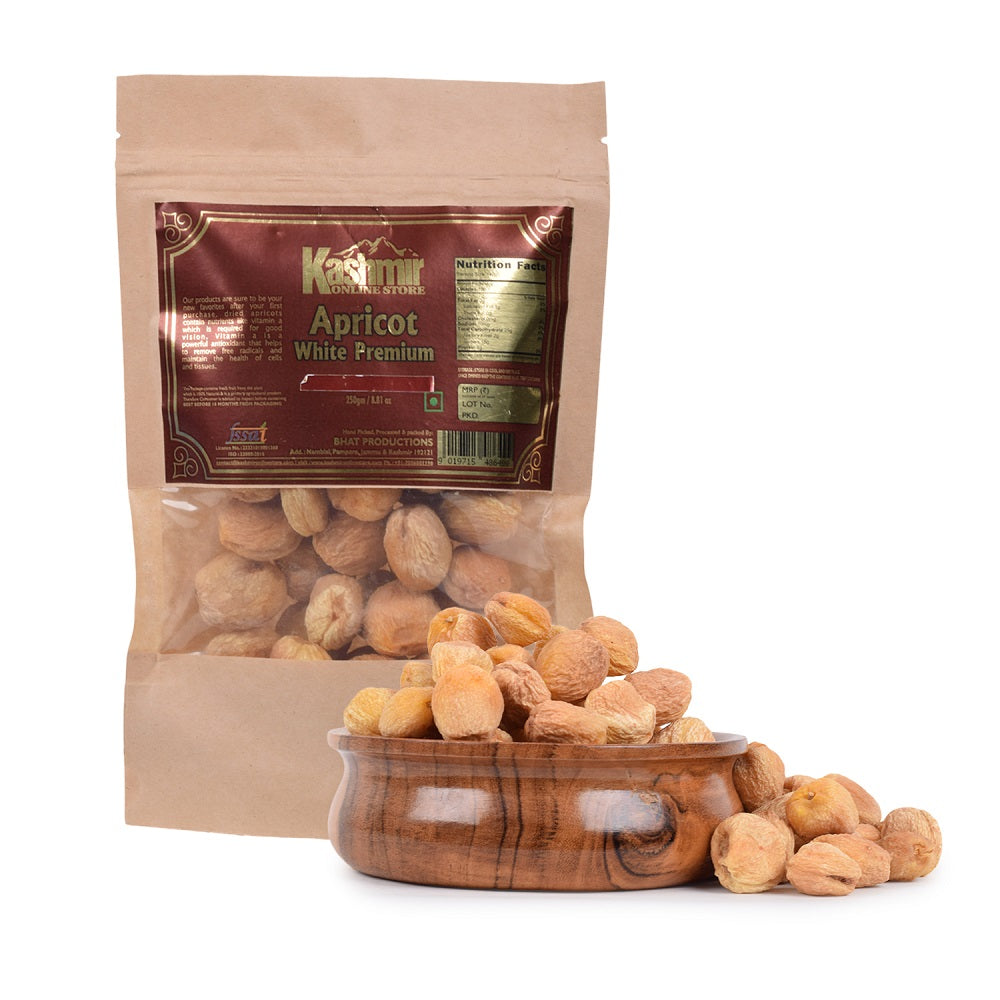
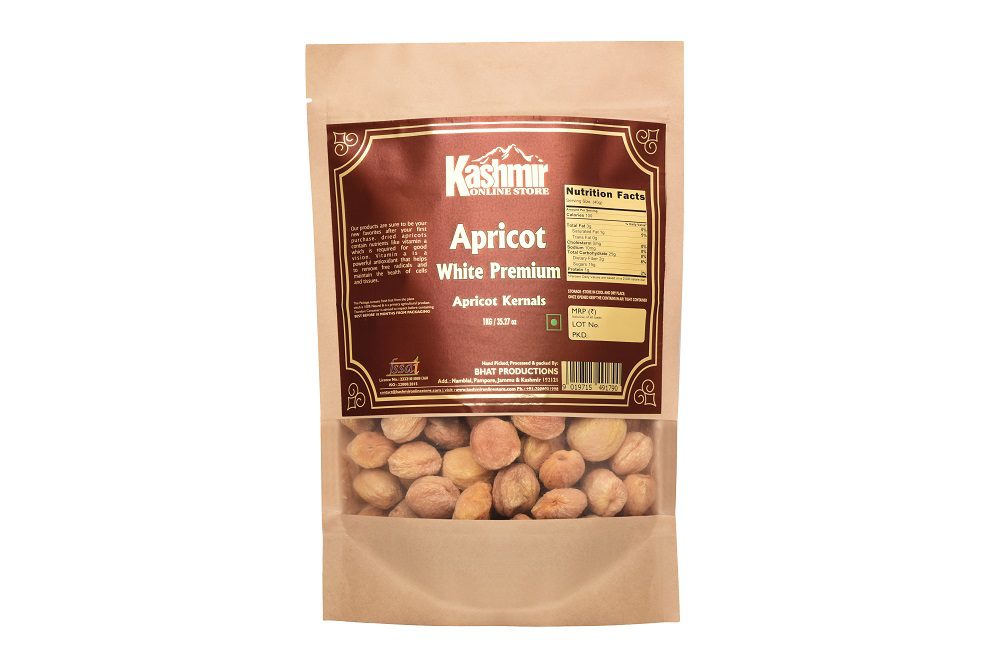
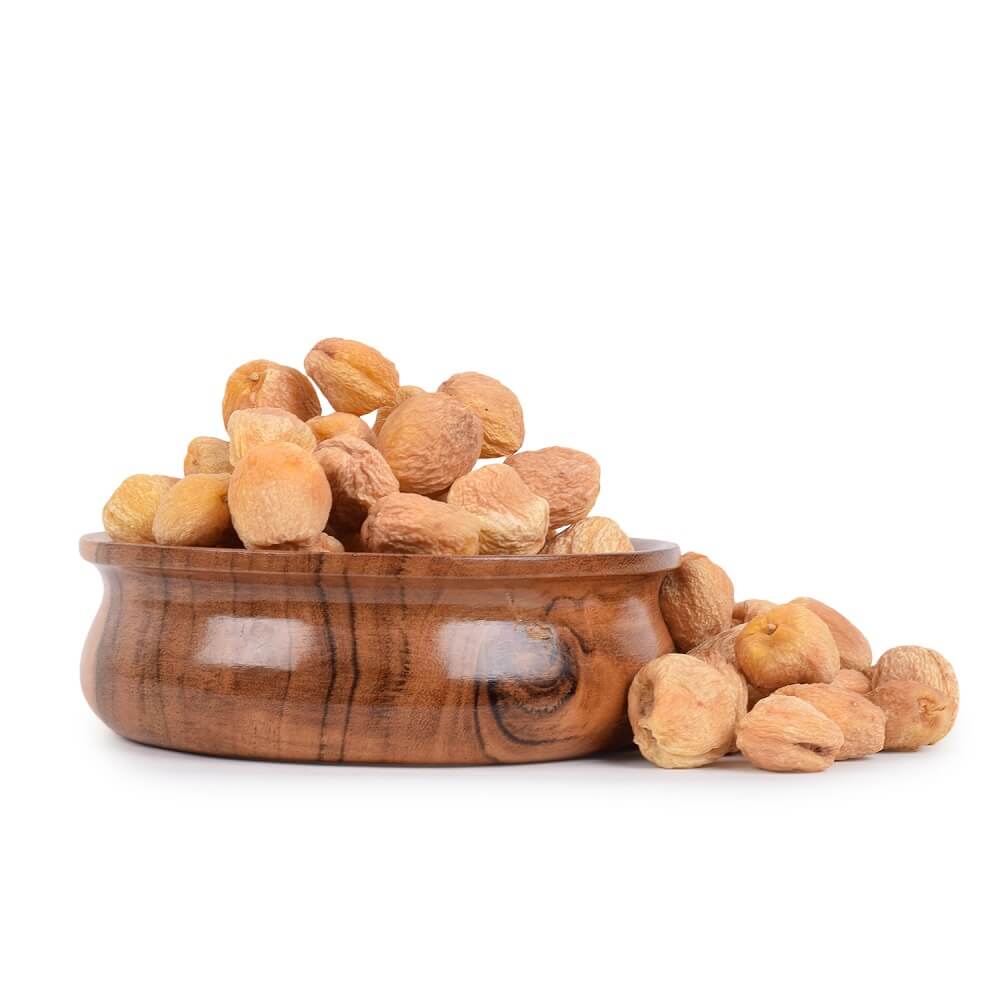
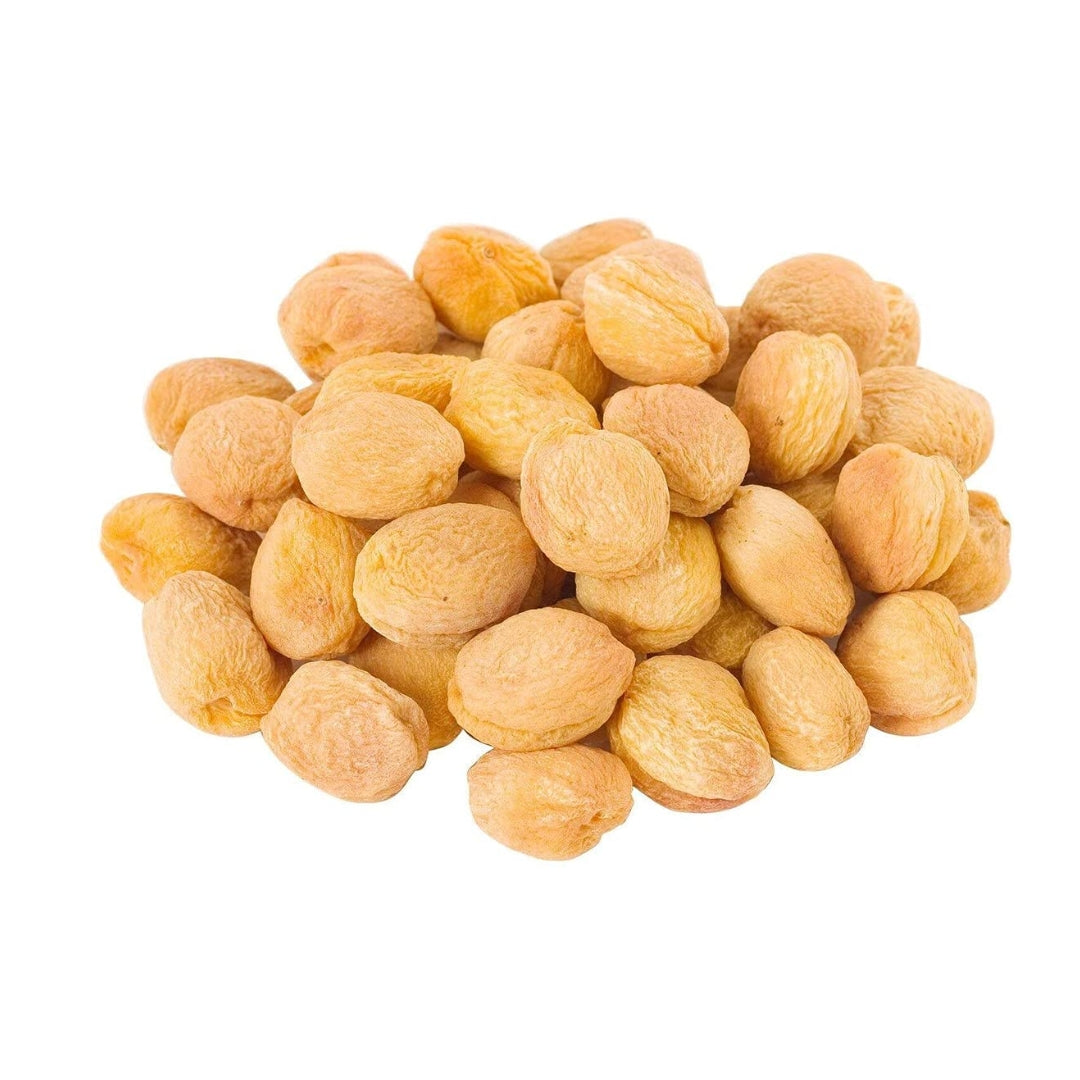
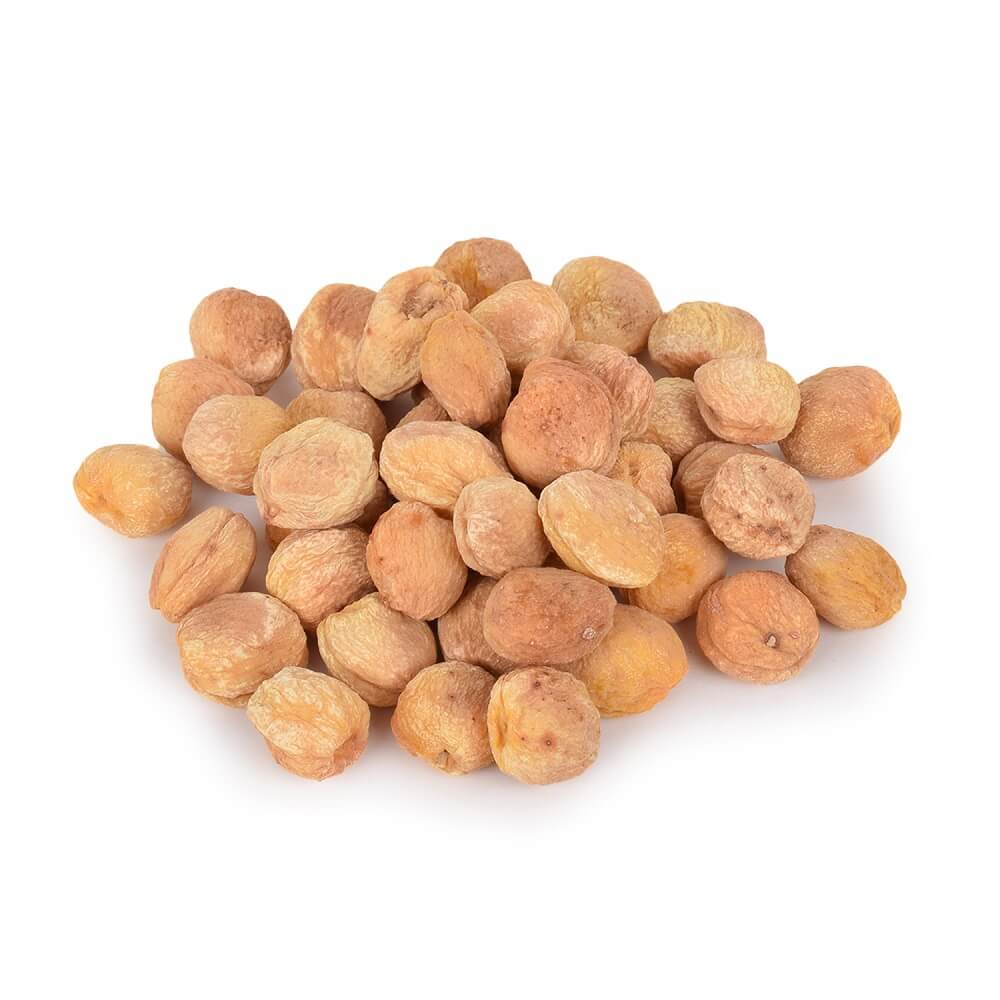
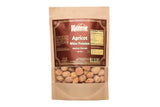
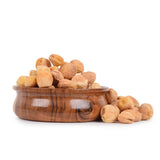
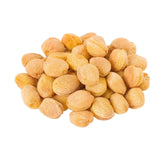
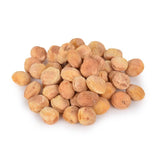
Pale cream-gold white jardalu — the gentler apricot. Milder and softer in flavour than the red, and easy to eat straight from the pack without soaking.
MilderThan red jardalu
UntreatedNo sulphur
Eat DryNo soaking needed
250g–2kgPack sizes
Highlights
Pale cream-gold, sun-dried whole
Gentler and less tart than red jardalu
Soft enough to eat dry, no soaking required
Good for lunchboxes and everyday snacking
Stone in — dried whole around the pit
Dispatched from Pampore, Kashmir, with GST invoice
Pale does not mean bleached
People sometimes see a very light apricot and assume something was done to it. It works the other way round. Sulphur treatment produces bright orange, not pale cream — so this muted shade is itself evidence that the fruit was left alone.
The pale colour comes from the variety and from drying in gentler conditions than the red jardalu gets.
Which apricot to choose
Buy red jardalu if you want an intense, tart fruit and do not mind soaking it. Buy this one if you want something softer and ready to eat. Buy seedless khubani if the stone is the problem.
Detail
Specification
Product
Dried white apricots (jardalu), stone in
Drying
Sun-dried whole, untreated
Colour
Pale cream-gold — natural, no sulphur
Flavour
Mild, gently sweet
Pack sizes
250g · 500g · 1kg · 2kg
Storage
Sealed and cool; refrigerate in humid weather
Questions
Are white apricots bleached?
No. Sulphur treatment produces bright orange, not pale cream — so the muted colour is itself evidence of untreated fruit. The pale shade comes from the variety and the drying method.
How do they differ from red?
Milder and gentler. Red jardalu is tart and intense; white is softer in flavour and easier to eat dry without soaking.
Do they need soaking?
Not necessarily. They are easier to eat straight from the pack than red jardalu, though soaking still softens them if you prefer.
Do they have stones?
Yes, dried whole with the stone in. Mention it before serving to children.