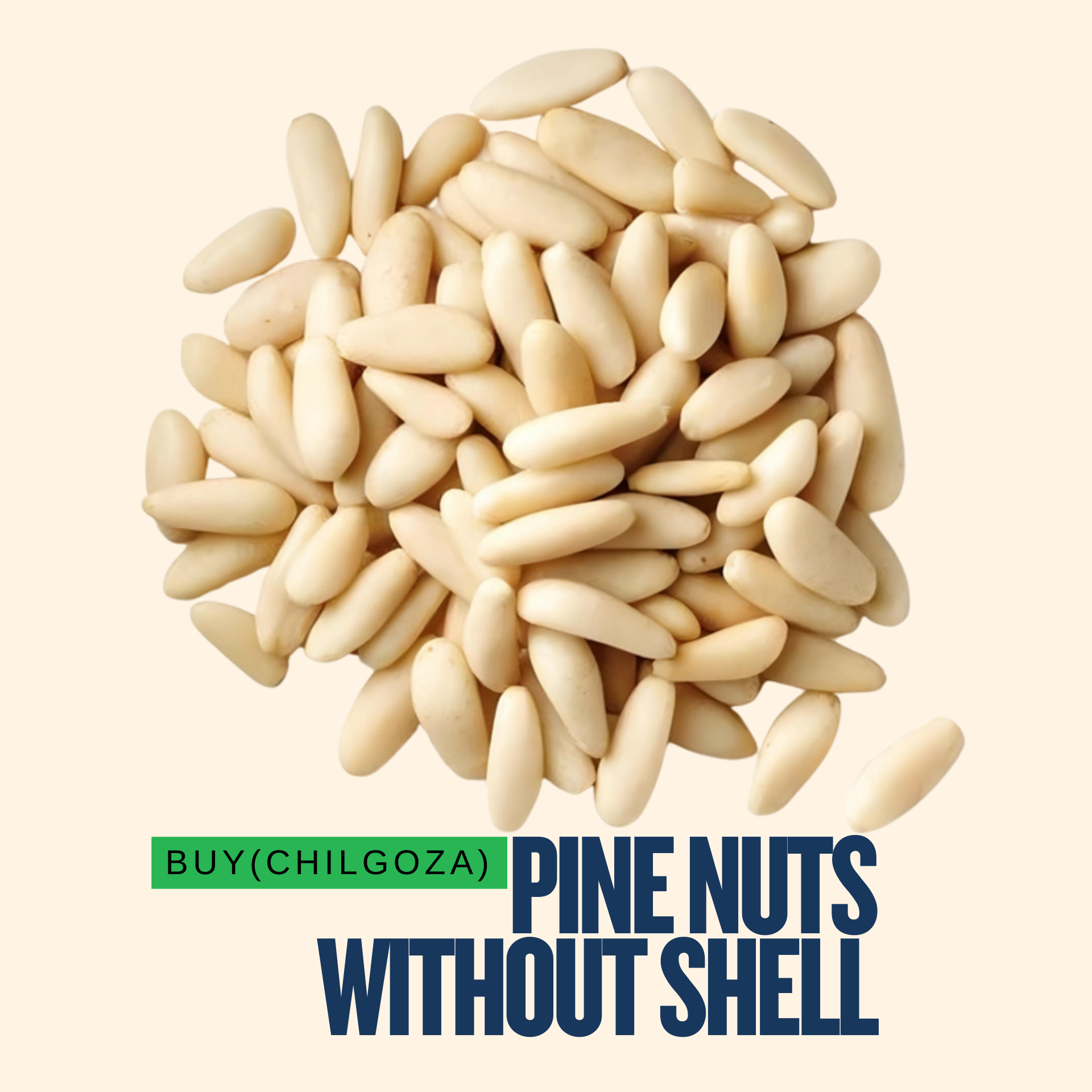
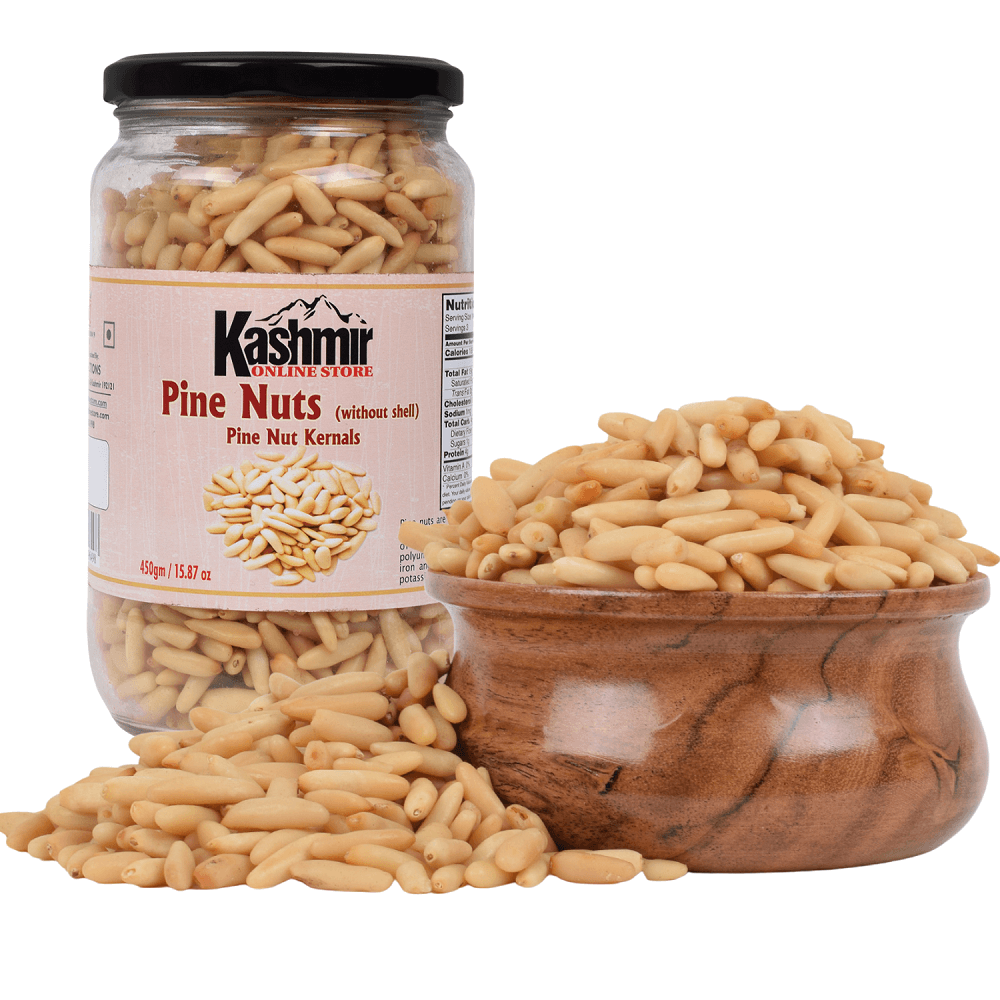
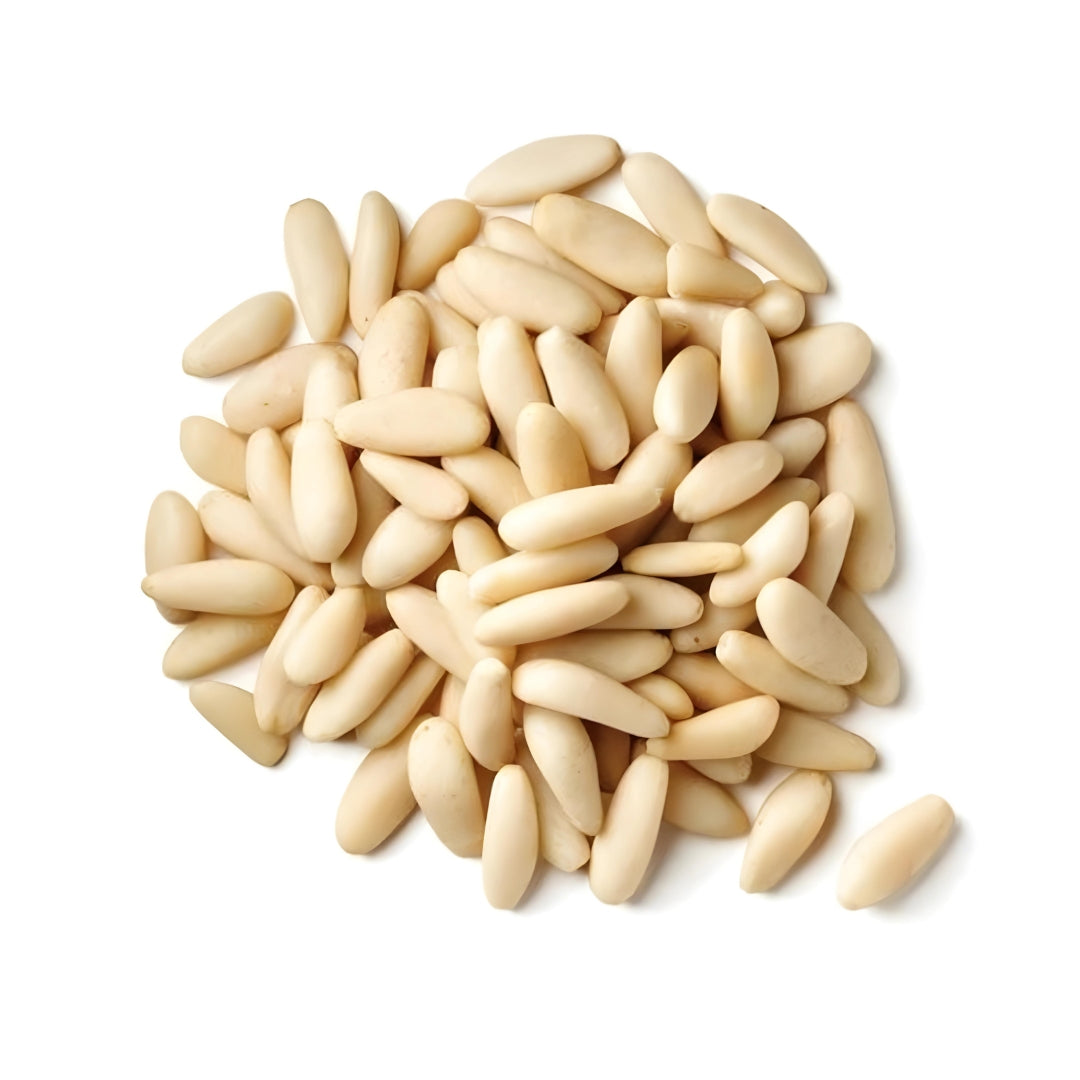
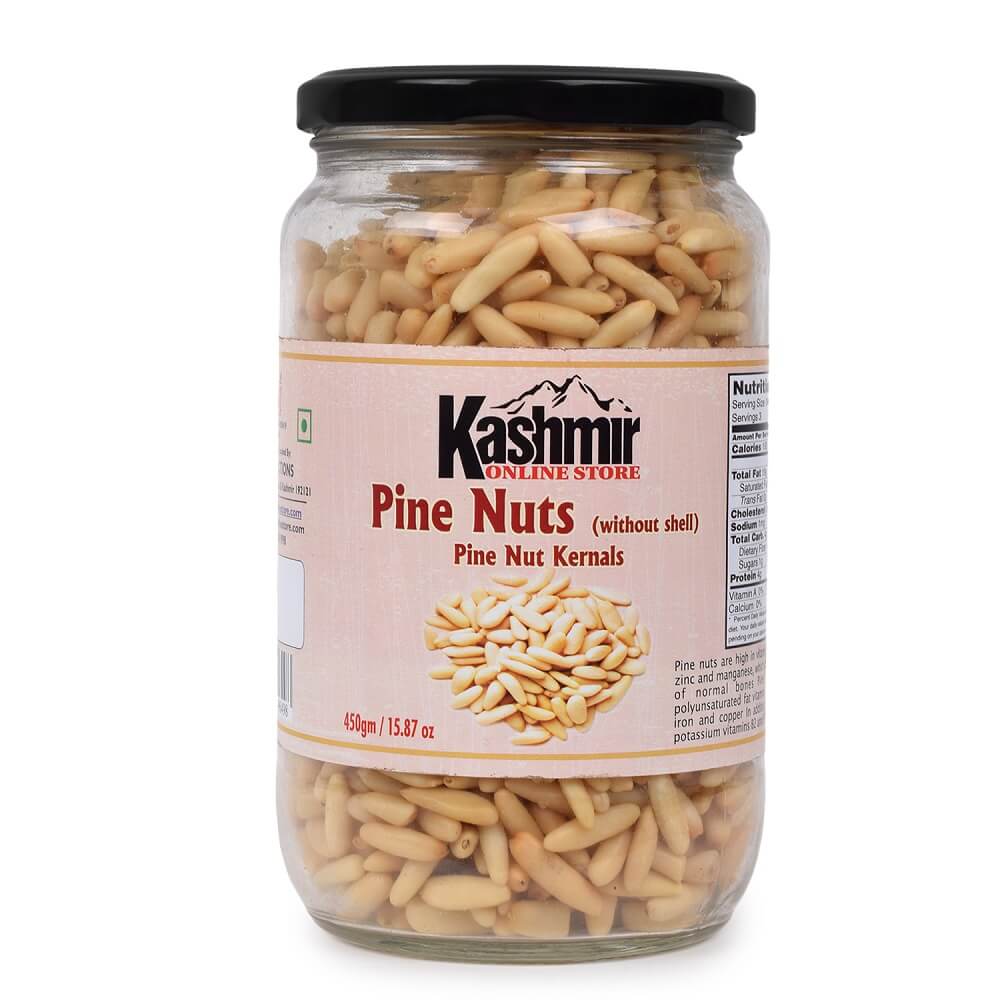
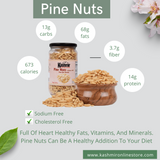
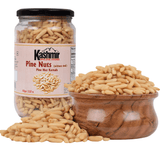
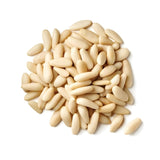
Roasted chilgoza kernels, already out of the shell. Someone shelled every one of these by hand — there is no machine that does it without crushing the kernel.
Hand ShelledOne at a time
RoastedDeeper flavour
ReadyNo cracking
250g–1kgPack sizes
Highlights
Chilgoza kernels, shelled by hand and roasted
Soft, buttery, faintly resinous — tender not crunchy
Straight into a dish, no preparation
For pulao, traditional sweets, salads and pesto
Refrigerate once opened — high oil, no shell to protect it
Dispatched from Pampore, Kashmir, with GST invoice
Where the price goes
Chilgoza is scarce before anyone touches it — cones come down from tall pines by hand, in a short season, from trees that took decades to bear. Turning that into a kilo of clean kernels is a separate job entirely: the kernel is small, shells come off individually, and hours of manual work sit behind every pack.
Buy shelled when cooking, in-shell when snacking
If the chilgoza is going into a dish, buy these — you cannot crack a hundred shells mid-recipe. If you are sitting and eating them slowly, our in-shell pack costs considerably less and keeps longer. We would rather say that than sell you the dearer pack.
Detail
Specification
Product
Chilgoza pine nut kernels, shelled
Preparation
Roasted, ready to eat
Shelling
By hand — no mechanised method exists
Character
Soft, buttery, faintly resinous
Pack sizes
250g · 500g · 1kg
Storage
Sealed; refrigerate once opened
Questions
Why do shelled chilgoza cost so much more?
The shells come off one at a time by hand. The kernel is small, so a kilo takes a great deal of raw material and many hours of manual work.
Roasted or raw?
Roasted, which deepens the buttery, faintly resinous flavour. Ready to eat straight from the pack.
What do they taste like?
Soft and buttery with a gentle resinous note. Tender rather than crunchy, which surprises people expecting something firm.
How should I store them?
Sealed and refrigerated in warm weather. The oil content is high and there is no shell protecting the kernel.