
-
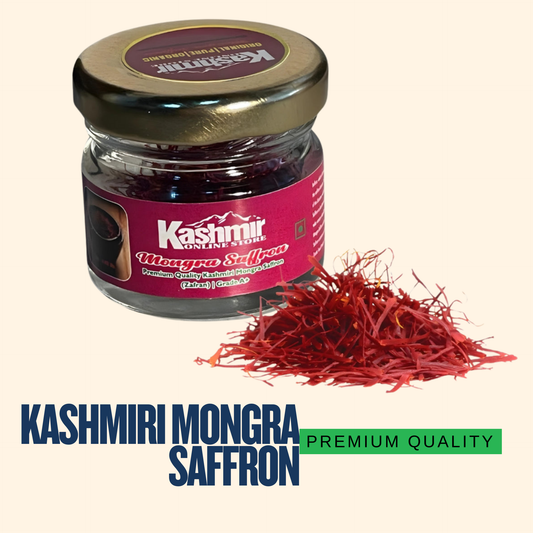
Mongra is the grade of Kashmiri saffron where only the deep-red stigma tip is kept and the pale yellow base of each thread is cut away. These are whole Mongra threads grown in Pampore, graded and packed at our own shop in Namblabal, Pampore...
- From Rs.530.00
Rs.650.00- From Rs.530.00
- (-18%)
- Unit price
- per
Save 120.00 -
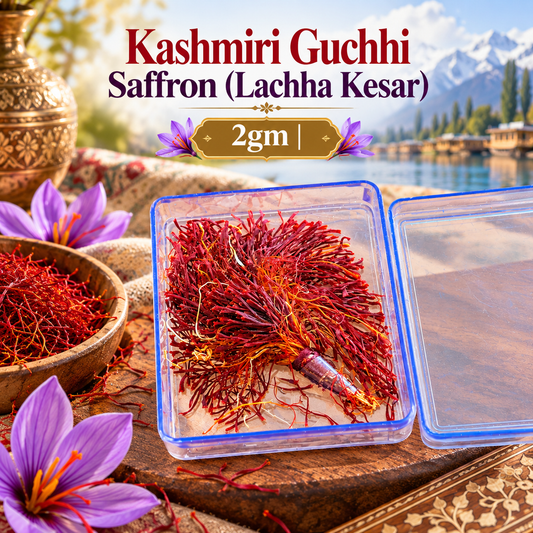
Vendor: Kashmir Online StoreKashmiri Guchhi Saffron (Lachha Kesar) 2gm | Whole Bunch Kashmiri Kesar from PamporeKashmir Online Store · Pampore Kashmiri Guchhi Saffron (Lachha Kesar) — 2gm The whole bunch, exactly as it comes off the flower. Guchhi saffron is the full, tied bunch — deep red stigmas with the yellow style still attached. Same Kashmiri crocus as Mongra,...
- Rs.799.00
Rs.999.00- Rs.799.00
- (-20%)
- Unit price
- per
Save 200.00 -
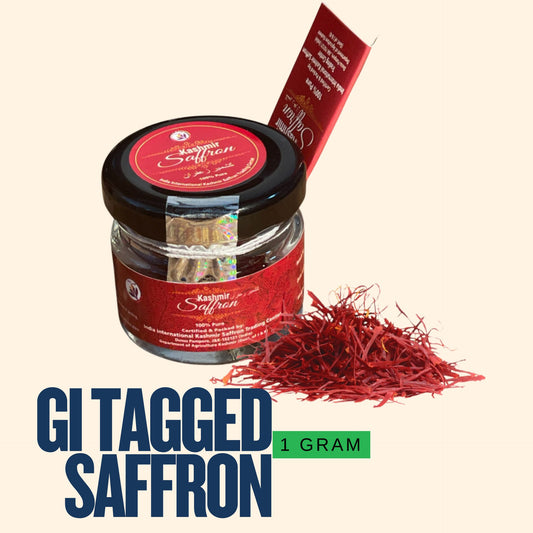
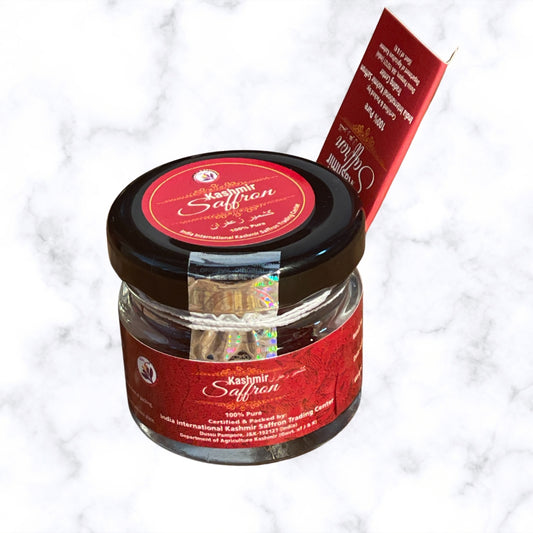
Kashmir Online Store · GI-Tagged Kesar GI-Tagged Kashmiri Saffron Same flower. Same grade. Documented origin. Grade 1 Mongra saffron from the recognised Kashmir saffron belt, sold with its geographical-indication provenance. What you are paying extra for is the paperwork, not better threads — and...
- Rs.1,000.00
- Rs.1,000.00
- (-0%)
- Unit price
- per
-
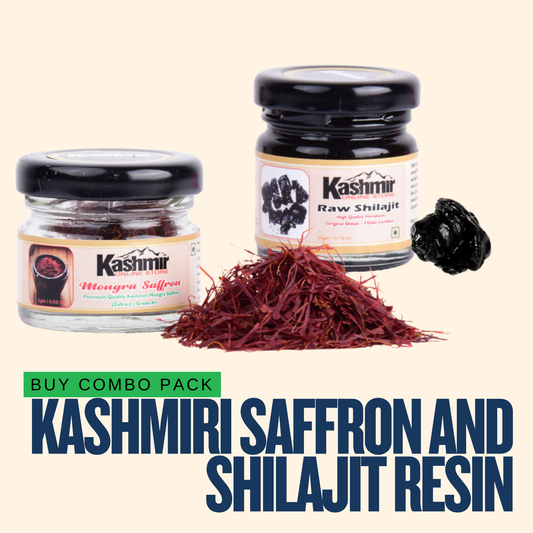
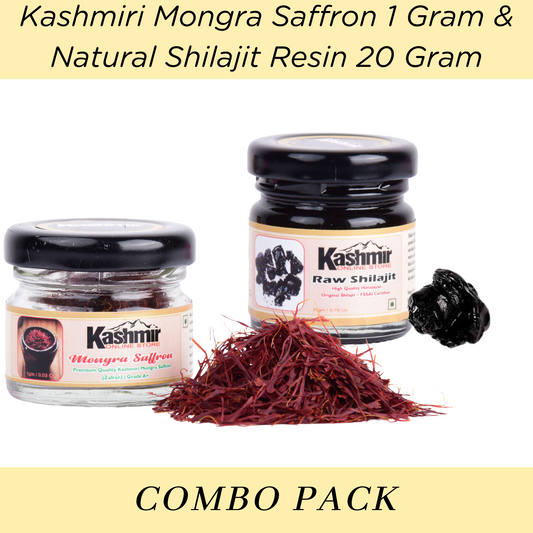
Elevate your health with the perfect duo—our Combo Pack of High-Quality Kashmiri Saffron and Pure Shilajit Resin. Carefully sourced from the pristine valleys of Kashmir, this combination is a powerhouse of natural goodness designed to rejuvenate your body and mind. In this section, we...
- From Rs.1,350.00
Rs.1,550.00- From Rs.1,350.00
- (-14%)
- Unit price
- per
Save 200.00
From Pampore, Kashmir
Buy Kashmiri Saffron Online
Kashmiri kesar grown in Pampore and graded and packed at our own shop in Namblabal. Choose between Mongra and Lachha saffron, compare pack sizes and the price per gram, and order with free shipping across India.

- Free shippingAcross India, no minimum
- Packed in PamporeDispatched within 3 working days
- Lab report publishedRead the full report
- COD availableSealed saffron: 30-day returns

Compare Kashmiri Saffron Packs
Every in-stock Kashmiri saffron pack, with the price per gram worked out from today's price. Compare within the same grade — Mongra and Lachha are different cuts, so a lower price per gram for Lachha is expected.
| Product | Weight | Grade | GI status | Price | Per gram | Action |
|---|---|---|---|---|---|---|
| Kashmiri Mongra Saffron | 1 g | Mongra | Not claimed | 530.00 |
530.00 | |
| Kashmiri Mongra Saffron | 2 g | Mongra | Not claimed | 1,050.00 |
525.00 | |
| Kashmiri Mongra SaffronLowest per gram · Mongra | 3 g | Mongra | Not claimed | 1,499.00 |
499.66 | |
| Kashmiri Mongra Saffron | 5 g | Mongra | Not claimed | 2,500.00 |
500.00 | |
| Kashmiri Guchhi Saffron | 2 g | Lachha | Not claimed | 799.00 |
399.50 |
Per-gram price = pack price ÷ net weight. Shipping is free across India, so this is your delivered price within India. Sold-out packs are not listed. International shipping is quoted separately on WhatsApp.
Mongra vs Lachha Saffron: What You Are Paying For
Each saffron flower has three red stigmas joined to a pale yellow style. How much of that pale part is left on the thread decides the grade — and the price per gram. Both are genuine Kashmiri kesar.
| Mongra kesar | Lachha (Guchhi) kesar | |
|---|---|---|
| What the thread is | Red stigma tip only; pale base cut away | Red stigma with part of the pale style still attached |
| How it looks | Shorter, all-red threads | Longer threads in a bunch, red with yellow ends |
| Colour from the same weight | Higher — every gram is red portion | Lower — part of the weight is pale style |
| Price per gram | Higher | Lower |
| Best for | Strong colour from a small amount, kahwa, gifting | Everyday cooking when you don't mind using a little more |
Grade, origin and GI are three different things. Mongra or Lachha describes the cut. Pampore, Kashmir is the origin. A GI (Geographical Indication) tag is a documented origin claim with its own paperwork — Kashmir saffron received GI registration in 2020. We do not claim GI status for our Mongra or Lachha packs. More in Mongra vs GI-tagged saffron.
Kashmiri saffron vs saffron from other countries: most of the world's saffron is grown in Iran, and saffron is also produced in Afghanistan, Spain and elsewhere. Origin alone does not tell you quality — the cut, freshness, storage and test results do. We sell only Kashmiri saffron from Pampore. Our guide Kashmiri saffron vs other saffron covers the differences buyers usually ask about.
Lab Testing: What a Saffron Report Shows
 Open our saffron lab report →
Saffron is easy to adulterate — with dyed fibres, safflower, or simply extra moisture. Colour and smell can't settle it; a laboratory test can. An independent lab report on a sample of our Kashmiri saffron is published in full, so you can read the measured values yourself.
Saffron is assessed internationally under ISO 3632. These are the main things a report measures:
Crocin
Colouring strength — how much golden colour the saffron releases. Usually the headline number.
Picrocrocin
The compound behind saffron's bitter-honey flavour.
Safranal
Aroma — the scent you notice when a pack is opened and in finished dishes.
Moisture
Water content. Too much means you are paying saffron prices for water, and threads spoil faster.
What our published report covers
A tested sample of our Kashmiri saffron. Open the report to see the parameters and values measured.
What it does not cover
It is not a certificate for every batch. Want to know about the batch you will receive? Ask us on WhatsApp before ordering.
Home check: drop a few threads in warm water. Real saffron releases gold colour slowly over several minutes; dyed material often bleeds red within seconds. It is a useful first check, not a lab result — see how to identify real Kashmiri saffron.
Which Kashmiri Saffron Pack Should You Choose?
First time buying saffron
Start with the 1 g Mongra pack — our smallest — and check colour and aroma before you buy more.
Regular home cooking
The 2 g, 3 g and 5 g Mongra packs suit homes that use kesar often. The table above shows which has the lowest price per gram today.
Lower budget per gram
Lachha saffron costs less per gram. Use a few more threads for the same colour.
Gifting
A sealed Mongra pack. If origin paperwork matters to the person receiving it, ask us what comes with the pack before you order.
Not sure how much you need? Read how much saffron to buy. Need 30 g or more? Jump to bulk buying.
Origin and Details You Can Check
Grown in Pampore
Pulwama district, Kashmir — the valley's main saffron-growing area.
Packed at our shop
Graded and packed in Namblabal, Pampore, J&K 192121. Visit us.
Licensed & invoiced
FSSAI licence 11022470000118 on every pack, GST invoice with every order.
Best-before date is printed on each pack. All our licences and the saffron lab report are on Lab Reports & Certifications.
How to Use Kashmiri Kesar
One rule for every dish: crush a few threads lightly, soak them in a little warm milk or water for 10–20 minutes, then add the liquid and the threads together. Never sprinkle dry threads straight into food.
Kahwa
Boil the water first, take it off the heat, then add tea, spices and a few threads. Kahwa & tea
Biryani & pulao
Drizzle soaked saffron over the top layer of rice before dum.
Kesar milk
Stir soaked threads into a glass of warm milk; sweeten lightly.
Desserts
Kheer, phirni, rasmalai — add near the end. Rasmalai recipe
Cooking ideas
Storage
Tightly closed, cool, dark and dry, away from the stove. Use a dry spoon. Storage guide
Trade & bulk
Buying Saffron in Bulk?
Packs from 30 g upwards are listed on our saffron wholesale page. For regular trade supply, minimum quantities are set per product and shared once we know your requirement; prices are quoted per enquiry.
For a useful quote, send on WhatsApp: business name and city, GSTIN or IEC, grade and quantity, delivery location, and when you need it. Details on our wholesale enquiries page.
Kashmiri Saffron: Common Questions
What is Kashmiri Mongra saffron?
Mongra is the cut of Kashmiri saffron where only the deep-red stigma tip is kept and the pale yellow base of each thread is removed, so every gram is the part that gives colour, aroma and flavour.
What is the difference between Mongra and Lachha saffron?
Both are real Kashmiri saffron. Mongra is the red tip only; Lachha keeps part of the pale style, so it costs less per gram but gives less colour from the same weight.
Which pack sizes are available?
Mongra in 1 g, 2 g, 3 g and 5 g; Lachha in 2 g. The comparison table shows which are in stock today. Larger packs are on the saffron wholesale page.
What is the Kashmiri saffron price per gram?
It depends on the grade and pack size. The comparison table above shows the current price and price per gram for every in-stock pack. Our Kashmiri saffron price guide explains what drives the price.
Is your saffron lab tested?
An independent lab report on a sample of our Kashmiri saffron is published on our Lab Reports & Certifications page. It covers that sample, not every batch; ask us on WhatsApp about the batch you will receive.
Is every product in this collection GI tagged?
No. Our Mongra and Lachha packs are sold without a GI claim. One listing is named as GI-tagged and is currently sold out; if GI paperwork matters to you, ask what documentation comes with it before buying.
How should saffron be stored?
Tightly closed, in a cool, dark, dry place away from heat and light. Use a dry spoon and use it by the best-before date on the pack.
Can I buy wholesale quantities?
Yes. Packs from 30 g are on the saffron wholesale page; for trade supply, send your requirement on WhatsApp or see our wholesale enquiries page.
Where do you deliver?
Free shipping across India with no minimum order, and Cash on Delivery in India. Orders leave Pampore within 3 working days; delivery to metro cities typically takes 7–8 working days. International orders are arranged on WhatsApp with shipping quoted first. See Delivery Information.
What return terms apply?
Sealed, unopened saffron can be returned within 30 days of delivery. Report damaged, wrong or missing items within 48 hours with photos. Full terms: Returns & Refunds.
Saffron Buying Guides
Choose Your Saffron Pack
Kashmiri kesar from Pampore · free shipping across India
Back to saffron packsQuestions? WhatsApp +91 88999 37924
GI Tagged Kashmiri Saffron
